
 English

Products
Productos principales:Canal hidroponico NFT/Cubo holandes hidroponico/Canalon de fresa/
Maceta de red de plastico/Medios de cultivo Rockwool
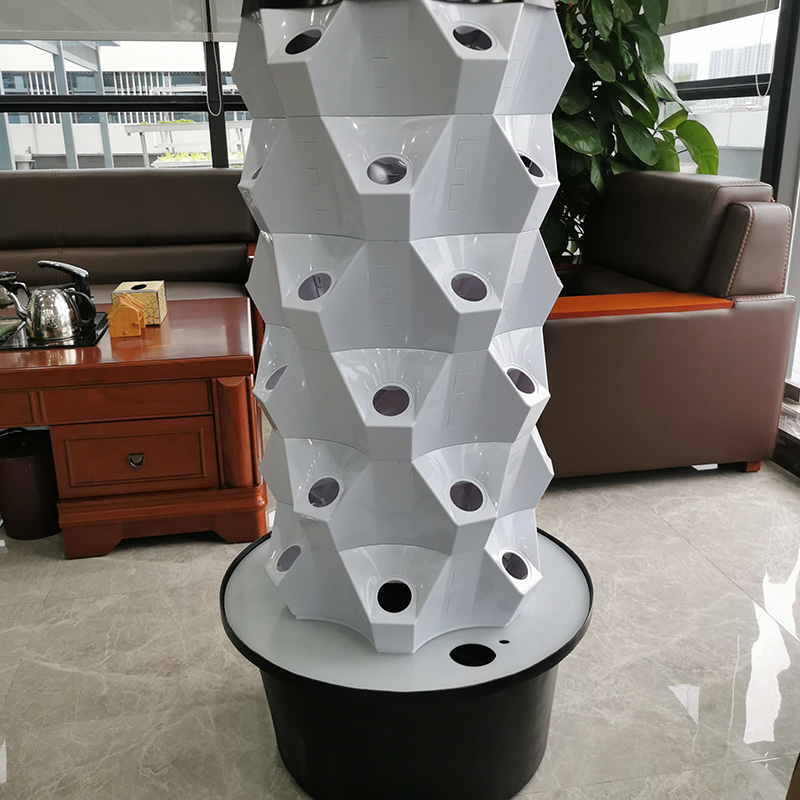


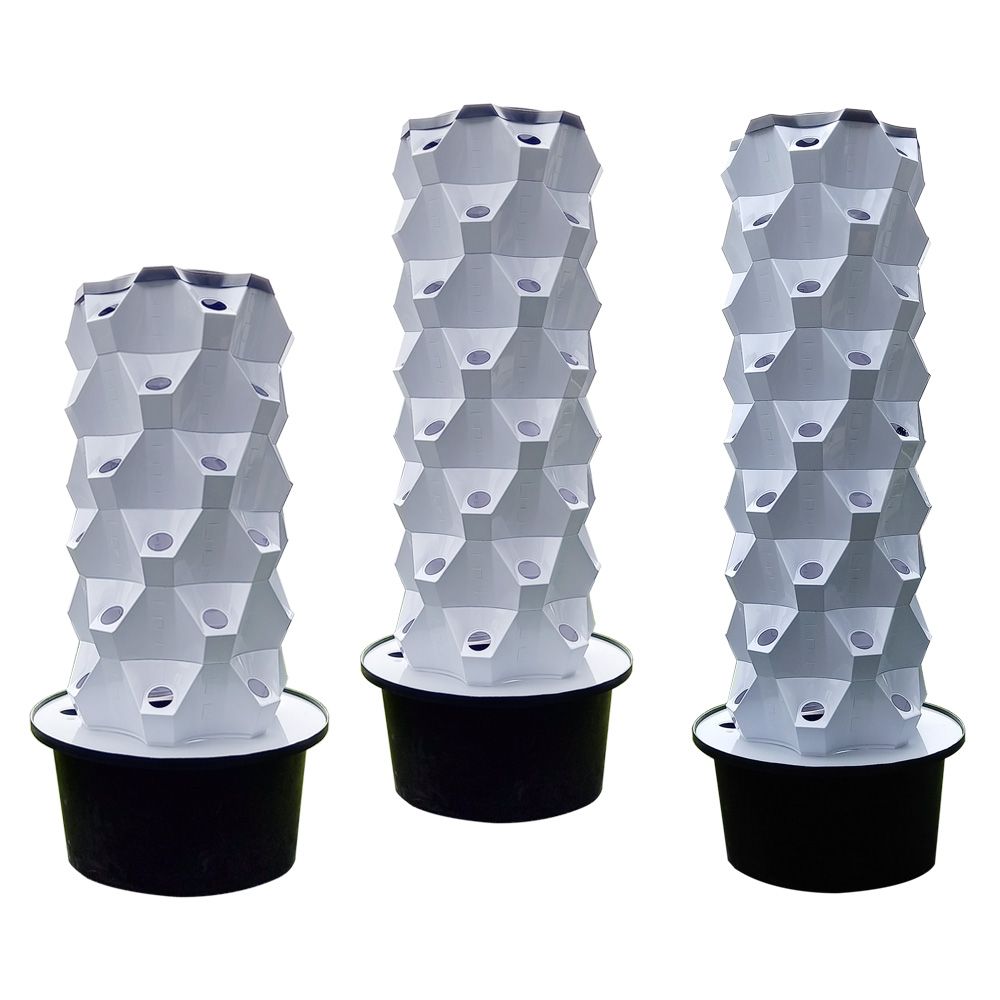
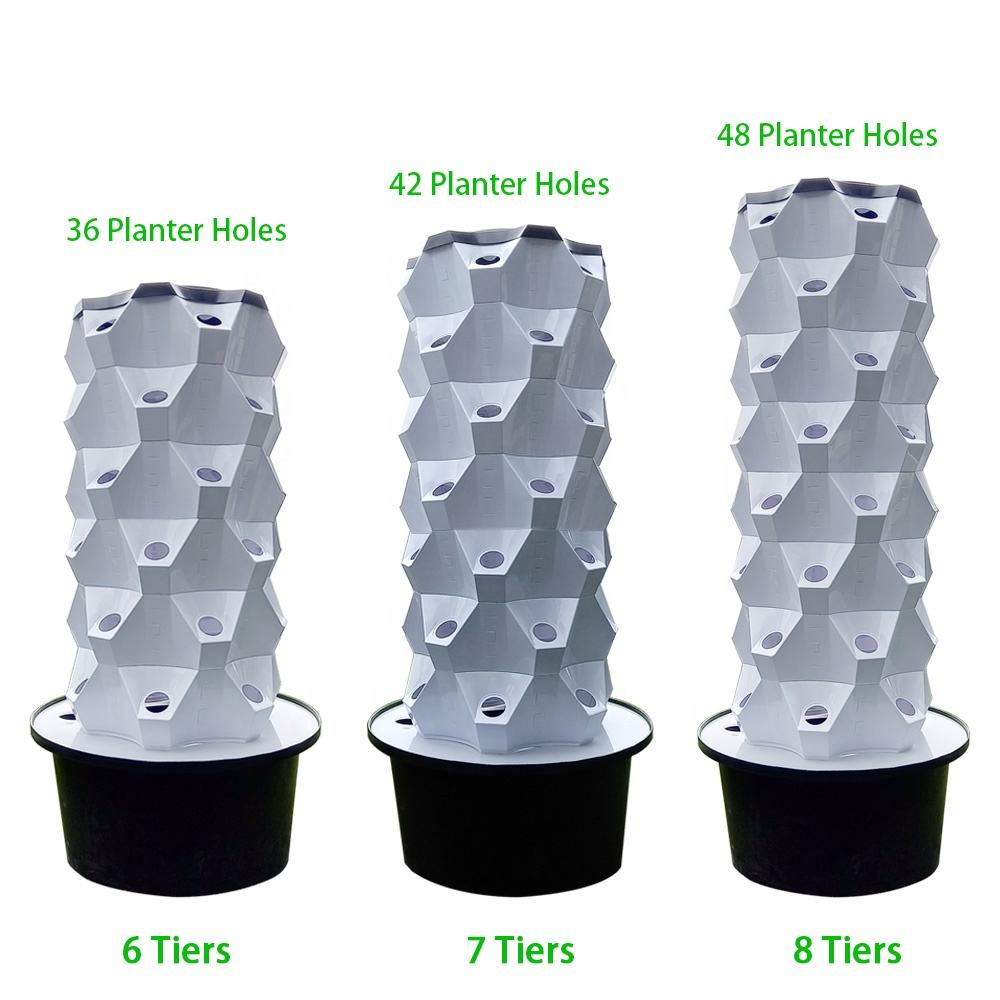
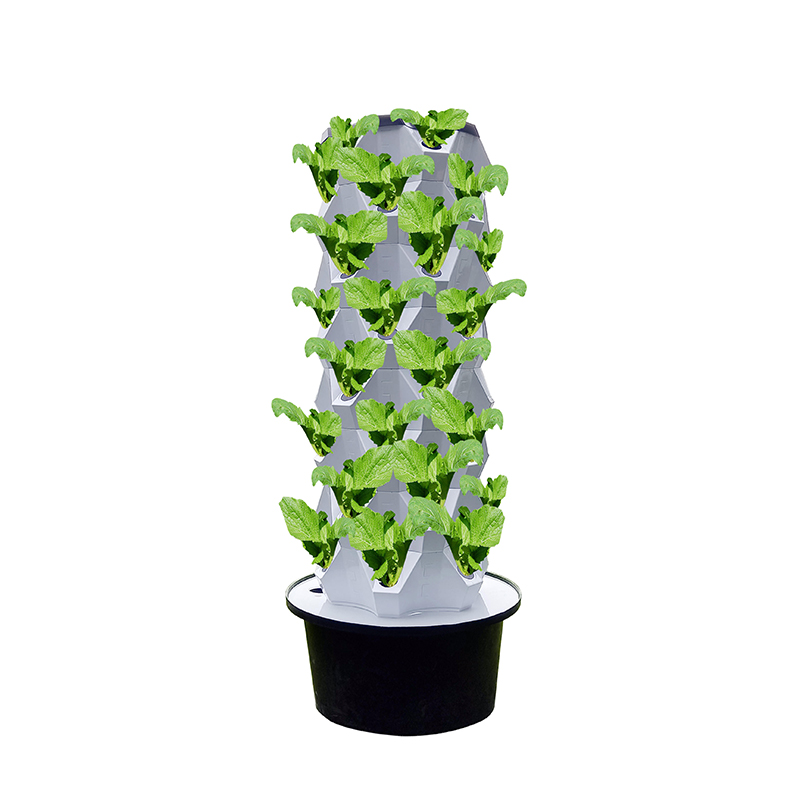
The Hydroponic Growing Tower is a vertical soilless cultivation system designed to grow vegetables, fruits, herbs, flowers, and other suitable crops in a compact space. By making full use of vertical growing space, this hydroponic tower can increase planting capacity while reducing the land required compared with traditional horizontal cultivation.
The system is suitable for home gardens, greenhouses, rooftops, indoor farms, commercial agriculture, and urban farming projects. It can also be configured with a water pump, irrigation system, timer, Net Pots, seedling Sponges, and other accessories to create a complete vertical hydroponic growing system.
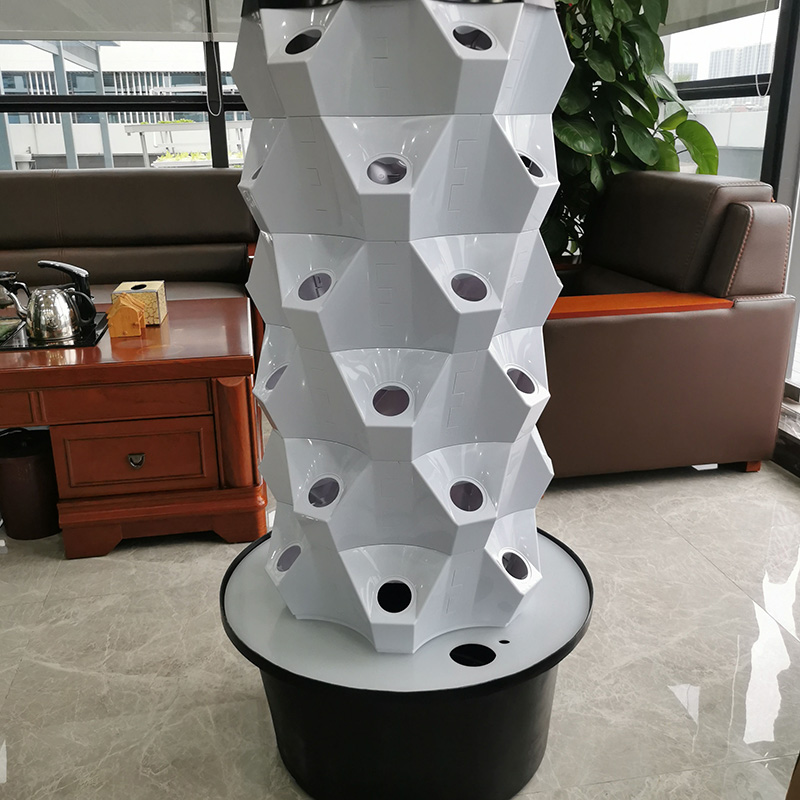
A hydroponic growing tower is a vertical farming structure with multiple planting positions distributed along the tower. Plants are grown without traditional soil, while water and nutrient solution are supplied to their roots through a circulation or irrigation system.
Unlike conventional horizontal hydroponic beds, the vertical hydroponic system uses upward space, making it particularly useful where floor space is limited.
Depending on the design, hydroponic towers can be used for:
Leafy vegetables
Lettuce
Herbs
Strawberries
Small fruits
Flowers
Seedlings
Other suitable hydroponic crops
Plants are placed into net pots or suitable growing containers positioned around the tower. Seedling sponges or other growing media can be used to support young plants.
The vertical structure creates multiple growing layers without requiring a large horizontal planting area.
A water pump delivers nutrient solution from a reservoir to the top or internal irrigation system of the tower. The nutrient solution is then distributed to the plants and returns to the reservoir for reuse.
This circulation process helps provide plants with water and essential nutrients while reducing unnecessary water loss.
A timer can be used to control the operating schedule of the water pump. Automated irrigation reduces the need for frequent manual watering and makes daily crop management easier.
The biggest advantage of a vertical hydroponic tower is its efficient use of space.
Instead of spreading plants across a large horizontal area, the system grows plants upward. This makes it suitable for:
Small gardens
Rooftops
Greenhouses
Indoor farms
Urban agriculture
Commercial growing facilities
The tower is designed for convenient assembly and stable installation. Its modular structure makes it easier to set up multiple units for larger hydroponic projects.
The hydroponic growing system does not rely on traditional agricultural soil. Plants receive water and nutrients through the irrigation system, making it possible to grow crops in areas where soil quality or available farmland is limited.
The recirculating irrigation system can reduce water consumption, while automated pumping and timer control can reduce repetitive watering work.
The hydroponic tower system can be used in different environments, from home gardens to commercial greenhouses and urban farming projects.
| Item | Specification |
|---|---|
| Product Name | Hydroponic Growing Tower |
| Product Type | Vertical Hydroponic Growing System |
| Model | GT-01 |
| Brand | G&N |
| Manufacturer | G and N Fortune Limited |
| Origin | Guangdong, China |
| Tower Size | 64 × 64 × 183 cm |
| Material | Plastic ABS |
| Color | White |
| Growing Method | Hydroponic / Soilless Cultivation |
| Application | Home Garden, Greenhouse, Hotel, Outdoor, Rooftop |
| Usage | Vegetables, Fruits, Flowers |
| Accessories | Water Pump, Net Pots, Seedling Sponge, Irrigation Pipe Set, Timer |
| Features | Stable Structure, Easy Assembly |
| Main Advantages | Land Saving, Water Saving, Labor Saving |
| Optional Systems | Irrigation, Cooling, Ventilation Systems |
A vertical hydroponic growing system can accommodate multiple plants in a small footprint. This makes it a practical option for areas where land is expensive or limited.
Because the nutrient solution can be collected and recirculated, the system can use water more efficiently than many traditional irrigation methods.
The integrated irrigation system and optional timer reduce manual watering requirements. Growers can also monitor nutrient solution and plant conditions more conveniently.
The compact structure makes a hydroponic tower suitable for urban agriculture, rooftop gardens, indoor farms, and small-scale home growing.
Multiple towers can be combined into a larger vertical farming system. Irrigation, ventilation, cooling, and other equipment can be added depending on the growing environment.
Leafy vegetables are among the most suitable crops for tower hydroponics.
Common examples include:
Lettuce
Spinach
Kale
Pak choi
Arugula
Other leafy greens
Many compact herbs can also be grown in a hydroponic growing tower, including basil, mint, coriander, and other suitable varieties.
Strawberries can be grown in suitable vertical hydroponic systems when sufficient plant spacing, lighting, irrigation, and root support are provided.
The tower can also be configured for flowers, seedlings, and other crops according to the planting requirements.
| Feature | Hydroponic Growing Tower | Traditional Soil Growing |
|---|---|---|
| Growing method | Soilless | Soil-based |
| Space utilization | High | Lower |
| Water management | Controlled circulation | Soil irrigation |
| Nutrient management | Directly controlled | Depends on soil |
| Land requirement | Low | Higher |
| Labor requirement | Can be reduced | Generally higher |
| Urban application | Excellent | Limited |
| Growing environment | Highly controllable | More dependent on soil |
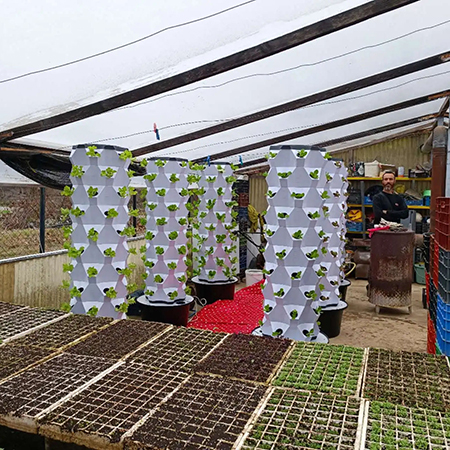
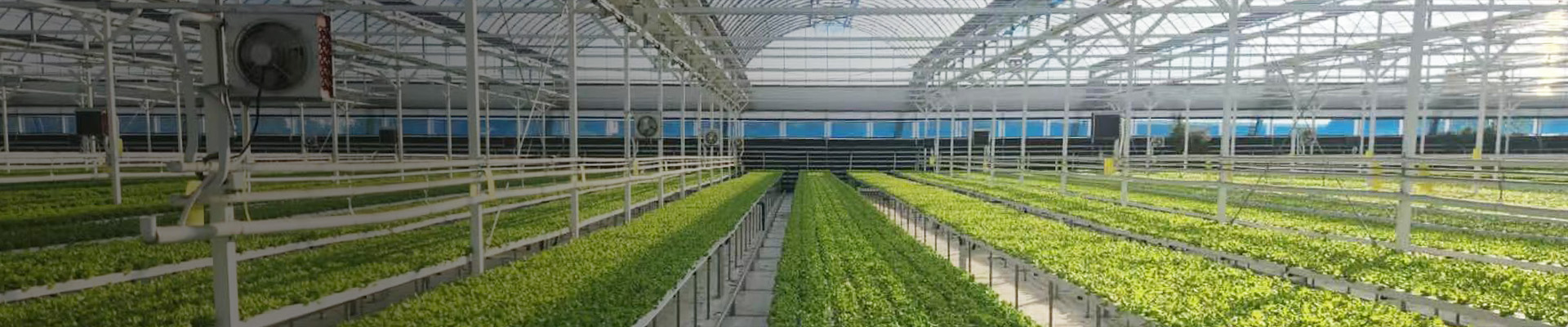
A greenhouse hydroponic tower can be used to maximize the available growing area inside a greenhouse.
Multiple towers can be arranged according to the greenhouse layout, sunlight direction, crop type, and maintenance requirements.
Additional systems can include:
Irrigation systems
Water pumps
Timers
Ventilation systems
Cooling systems
LED grow lights for indoor applications
This allows the tower to become part of a complete commercial vertical hydroponic system.
A hydroponic growing tower can also be used for indoor vertical farming. When natural sunlight is insufficient, LED grow lights can be installed to provide supplemental or primary lighting.
Indoor tower farming allows growers to control important growing conditions such as:
Light
Water
Nutrients
Temperature
Air circulation
This makes vertical hydroponics suitable for controlled-environment agriculture.
Hydroponic and aeroponic towers are both forms of soilless vertical cultivation, but their methods of supplying nutrients to plant roots are different.
In a hydroponic tower, plants receive water and nutrients through a circulating nutrient solution or irrigation system.
In an aeroponic tower, plant roots are generally exposed to air and supplied with nutrients through a fine mist or spray.
The appropriate system depends on the crop, project requirements, irrigation design, and desired level of automation.
The Hydroponic Growing Tower combines vertical space utilization with soilless cultivation and recirculating irrigation.
Its main advantages include:
Space-saving vertical design
Efficient water use
Reduced labor requirements
Easy assembly
Suitable for multiple crops
Suitable for indoor and outdoor growing
Suitable for greenhouses and rooftops
Flexible irrigation configuration
Suitable for home and commercial projects
For growers looking to make better use of limited space, a vertical hydroponic growing tower provides a practical solution for modern soilless cultivation.
A hydroponic growing tower is a vertical soilless cultivation system that allows multiple plants to grow in different positions along a tower while receiving water and nutrients through an irrigation system.
Lettuce, leafy vegetables, herbs, strawberries, flowers, seedlings, and other suitable crops can be grown in a hydroponic tower.
Yes. Multiple towers can be installed in a greenhouse to create a high-density vertical hydroponic farming system.
Yes. A recirculating hydroponic system can collect and reuse nutrient solution, helping improve water-use efficiency.
Yes. Indoor hydroponic towers can be used with suitable LED grow lights, irrigation equipment, ventilation, and environmental controls.
Not necessarily. A hydroponic tower supplies plants with nutrient solution, while an aeroponic tower typically uses a mist or spray to deliver nutrients to exposed roots.
Yes. Depending on the project, the growing tower system can be configured with different irrigation systems, accessories, cooling systems, ventilation equipment, and other components.

G and N is serving for more than 1,000 customers over 122 countries around the world, offering high-quality products and services to global customers.
Copyright © 2026 G AND N FORTUNE LIMITED All rights reserved.