
 English

Products
Productos principales:Canal hidroponico NFT/Cubo holandes hidroponico/Canalon de fresa/
Maceta de red de plastico/Medios de cultivo Rockwool
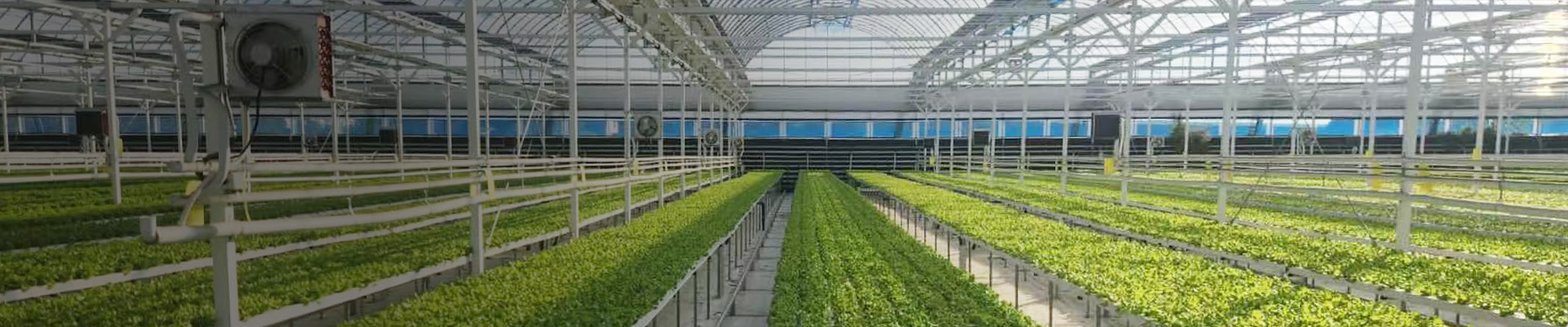
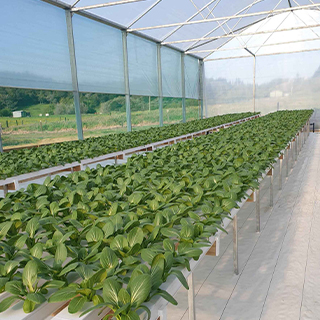


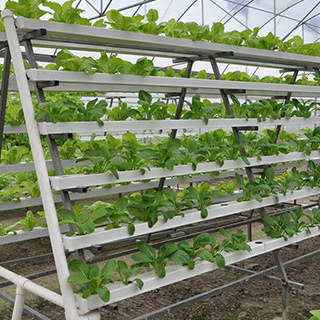
The Horizontal Type Hydroponic PVC Channel is a practical growing solution designed for NFT hydroponic systems, commercial greenhouses, and indoor farming projects. Made from food-grade PVC, this hydroponic grow channel supports the circulation of nutrient-rich water, allowing plant roots to absorb water and essential nutrients without soil.
Designed for flexible installation and scalable production, the horizontal hydroponic channel system is suitable for growing lettuce, spinach, kale, basil, mint, and other leafy vegetables. With multiple size and length options, it can be integrated into different hydroponic farming system layouts, from small indoor growing projects to large commercial greenhouse operations.
As a hydroponic channel supplier, G&N provides horizontal hydroponic PVC channels with customizable dimensions to meet different planting requirements and farm designs.
| Parameter | Details |
|---|---|
| Product Name | Horizontal Type Hydroponic PVC Channel |
| Material | Food-Grade PVC |
| Available Sizes | 100 × 50 mm, 100 × 40 mm, 110 × 110 mm |
| Standard Lengths | 2.9 m, 3 m, 5.8 m |
| Customization | Custom lengths and other specifications upon request |
| Growing Method | NFT Hydroponic System |
| Applications | Commercial greenhouses, indoor farms, and hydroponic agriculture |
| Suitable Crops | Lettuce, spinach, kale, basil, mint, and other leafy vegetables |
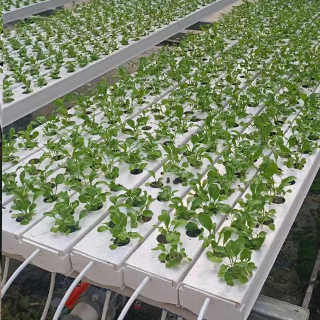
A horizontal hydroponic PVC channel is a planting component used to support soilless crop production. In an NFT (Nutrient Film Technique) hydroponic system, plants are held in planting holes or net pots above the channel, while their roots extend into a shallow stream of circulating nutrient solution.
The nutrient solution flows through the hydroponic planting channel and returns to a reservoir for recirculation. This process delivers water and dissolved nutrients to plant roots while allowing part of the root system to remain exposed to air.
Compared with traditional soil-based cultivation, a hydroponic PVC channel system provides greater control over nutrient delivery and water circulation. It is particularly suitable for leafy vegetables and herbs that thrive in well-managed NFT growing environments.
Manufactured from food-grade PVC, the hydroponic PVC channel is designed for agricultural growing applications. Its rigid channel structure provides a practical base for arranging planting rows in greenhouse and indoor hydroponic systems. Buyers should confirm the applicable material documentation for their intended use.
Available sizes include 100 × 50 mm, 100 × 40 mm, and 110 × 110 mm, with standard lengths of 2.9 m, 3 m, and 5.8 m. Custom lengths and other specifications can be discussed according to project requirements.
This flexibility makes the horizontal hydroponic grow channel suitable for different greenhouse dimensions, planting layouts, and installation plans.
The channel supports the circulation of a shallow nutrient solution along the root zone. When properly installed with a suitable pump, reservoir, and return drainage, it helps maintain a continuous nutrient supply for crops grown using the Nutrient Film Technique.
The horizontal hydroponic channel can be incorporated into different growing rack and support structures. Multiple channels can be arranged in parallel rows to accommodate different planting capacities, making the system adaptable to both new installations and future expansion.
The smooth PVC channel surface can be cleaned as part of routine farm maintenance. Regular cleaning, pump inspection, and nutrient solution monitoring help reduce the risk of blockages and maintain stable system operation.
A hydroponic PVC channel system uses water circulation and nutrient management to support plant growth without soil.
Step 1: Prepare the nutrient solution
Water and hydroponic nutrients are mixed in a reservoir. The solution should be adjusted according to the crop's growth stage and cultivation requirements.
Step 2: Pump the solution into the channels
A water pump delivers the nutrient solution to the upper end of each hydroponic grow channel.
Step 3: Allow a thin film of water to flow
The channels are installed with an appropriate slope so that a shallow stream of nutrient solution flows along the bottom. Plant roots absorb water and nutrients as the solution passes through the root zone.
Step 4: Return the solution to the reservoir
The remaining nutrient solution drains back into the reservoir for recirculation. Growers monitor the flow rate, pH, and nutrient concentration to maintain suitable growing conditions.
Correct channel slope, flow rate, root-zone conditions, and pump reliability are important for successful NFT cultivation.
The horizontal hydroponic PVC channel is suitable for commercial farms producing leafy vegetables and herbs. Multiple channels can be arranged in rows to create organized planting areas and support repeatable growing operations.
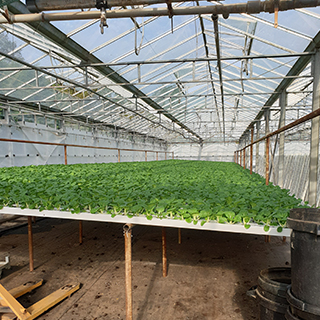
In greenhouse hydroponic systems, the channels can be installed on suitable support structures to create planting rows. Growers can combine them with irrigation equipment, nutrient reservoirs, and environmental controls according to their production requirements.
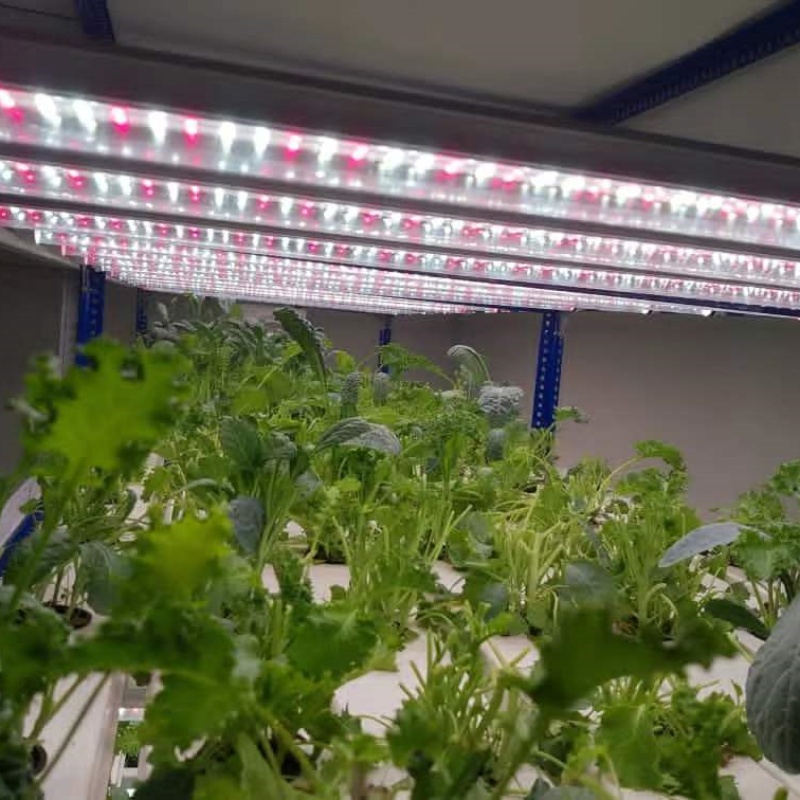
For indoor farms, a hydroponic channel system can be integrated with growing racks, pumps, reservoirs, and grow lights. The final layout should account for lighting coverage, airflow, maintenance access, and drainage.
Horizontal channels can be incorporated into multi-level growing racks where the building layout and crop requirements permit. This allows growers to plan planting capacity around available floor space and vertical clearance.
Universities, laboratories, and agricultural training centers can use NFT hydroponic channels to demonstrate nutrient circulation, root development, and soilless growing techniques.
A well-designed horizontal hydroponic system offers several practical benefits for growers:
Controlled nutrient delivery: Circulating nutrient solution allows growers to manage water and nutrient availability at the root zone.
Efficient water recirculation: Excess solution can return to the reservoir for reuse, although actual water consumption depends on crop transpiration, evaporation, system design, and cleaning requirements.
Organized planting layout: Horizontal channels support orderly crop rows and convenient access for planting, inspection, and harvesting.
Scalable installation: Additional channels can be incorporated into a larger system when the available space and water circulation capacity allow.
Flexible crop planning: Different channel dimensions and planting layouts can be considered for suitable leafy vegetables and herbs.
Horizontal and vertical hydroponic systems serve different growing requirements. The right choice depends on available space, crop type, maintenance access, and the desired planting configuration.
| Comparison | Horizontal Hydroponic Channel | Vertical Hydroponic System |
|---|---|---|
| Growing layout | Channels arranged in horizontal rows | Planting sites arranged vertically |
| Space planning | Requires suitable floor or rack space | Makes greater use of vertical space |
| Crop access | Often convenient along accessible rows | Access may vary by planting level |
| System design | Commonly used in NFT layouts | May use towers, stacked channels, or other configurations |
| Suitable applications | Greenhouses, indoor farms, and commercial NFT projects | Space-constrained growing areas and vertical farming projects |
Both systems require appropriate water delivery, drainage, nutrient management, and environmental conditions. Horizontal systems are not automatically more productive; performance depends on the complete farm design and crop management.
A horizontal hydroponic PVC channel is used to hold plants and guide nutrient solution through a soilless growing system. It is commonly used in NFT hydroponic systems for leafy vegetables and herbs.
The available sizes are 100 × 50 mm, 100 × 40 mm, and 110 × 110 mm. Standard lengths include 2.9 m, 3 m, and 5.8 m. Custom specifications can be discussed according to project needs.
Common crops include lettuce, spinach, kale, basil, mint, parsley, and other leafy vegetables or herbs suited to NFT cultivation. Crop selection should consider root development, planting-hole dimensions, and channel capacity.
Yes. It can be integrated into commercial greenhouse and indoor hydroponic projects. The required number of channels, support structure, pump capacity, and reservoir size should be planned according to the farm's production targets.
The channel is a growing component, while pumps, reservoirs, pipes, supports, and nutrient management equipment are typically part of the complete hydroponic system. Please confirm the included components when requesting a quotation.
Yes. Custom lengths and other specifications can be discussed. For a project quotation, provide the desired channel dimensions, planting-hole diameter and spacing, total quantity, and intended installation layout.
Clean the channels regularly, check the pump and drainage paths, and monitor nutrient concentration and pH. Also inspect the root zone for blockages and ensure that the nutrient solution continues to circulate properly.
An NFT channel delivers a shallow, circulating nutrient solution directly to plant roots. A substrate growing gutter supports growing media such as coco coir or rockwool, usually with nutrient solution delivered through drip irrigation. The appropriate product depends on the growing method and crop requirements.
Looking for a reliable hydroponic PVC channel supplier for your greenhouse, indoor farm, or commercial NFT project? G&N offers horizontal hydroponic PVC channels in multiple sizes and standard lengths, with customization options to suit different growing layouts.
Contact our team with your required dimensions, order quantity, planting-hole specifications, and project details to discuss a suitable hydroponic grow channel solution.

G and N is serving for more than 1,000 customers over 122 countries around the world, offering high-quality products and services to global customers.
Copyright © 2026 G AND N FORTUNE LIMITED All rights reserved.