
 English

Products
Productos principales:Canal hidroponico NFT/Cubo holandes hidroponico/Canalon de fresa/
Maceta de red de plastico/Medios de cultivo Rockwool
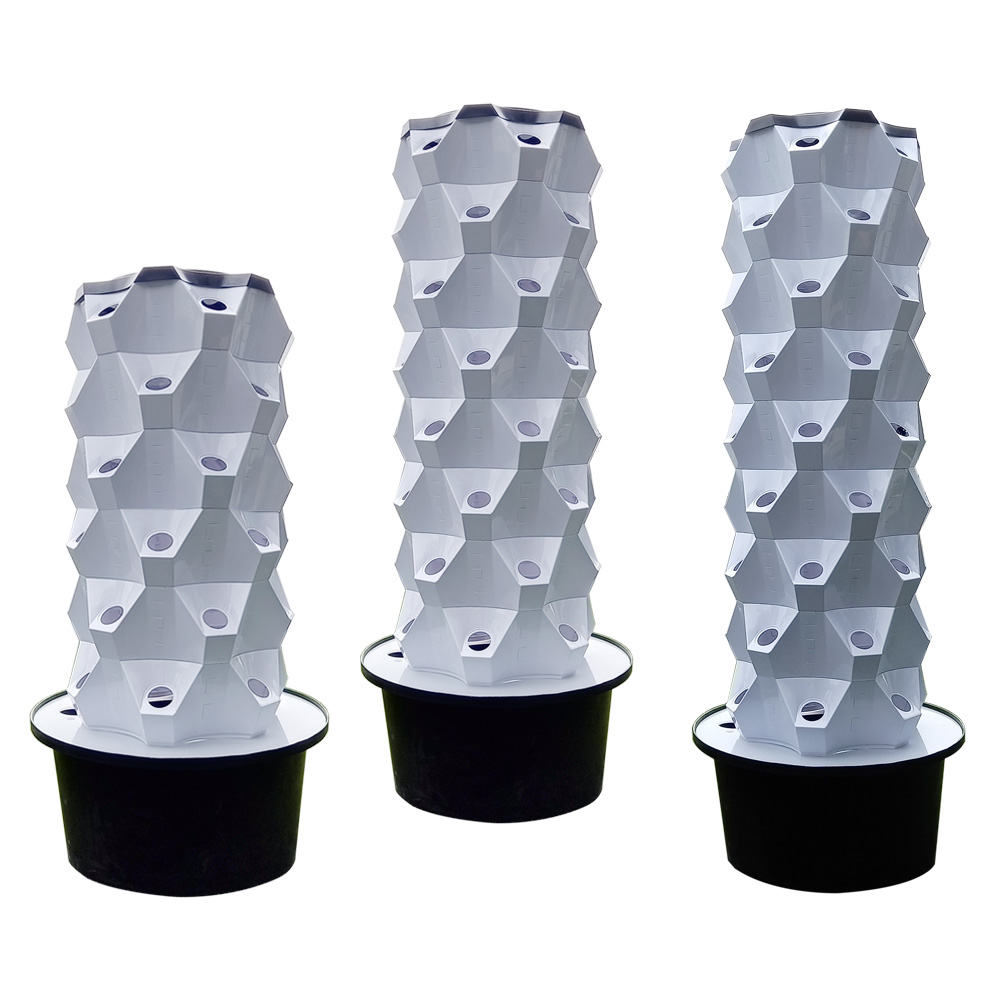


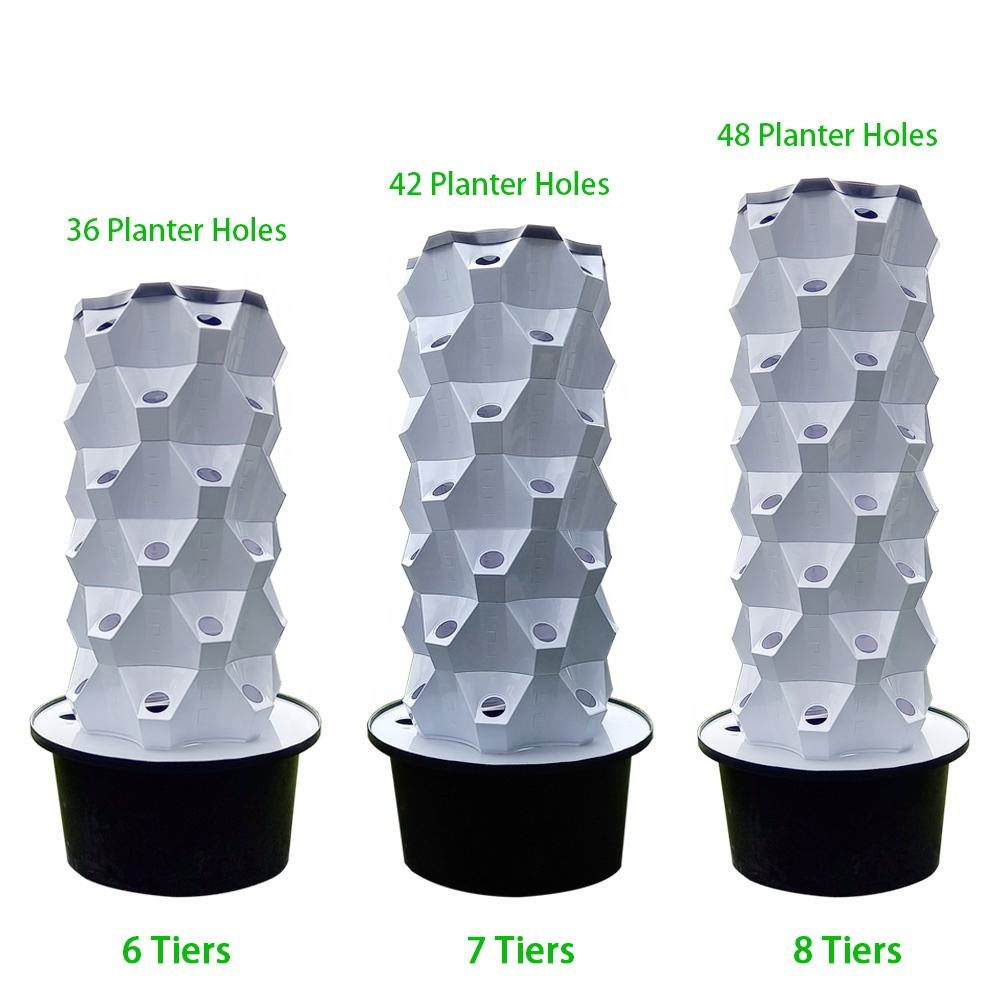
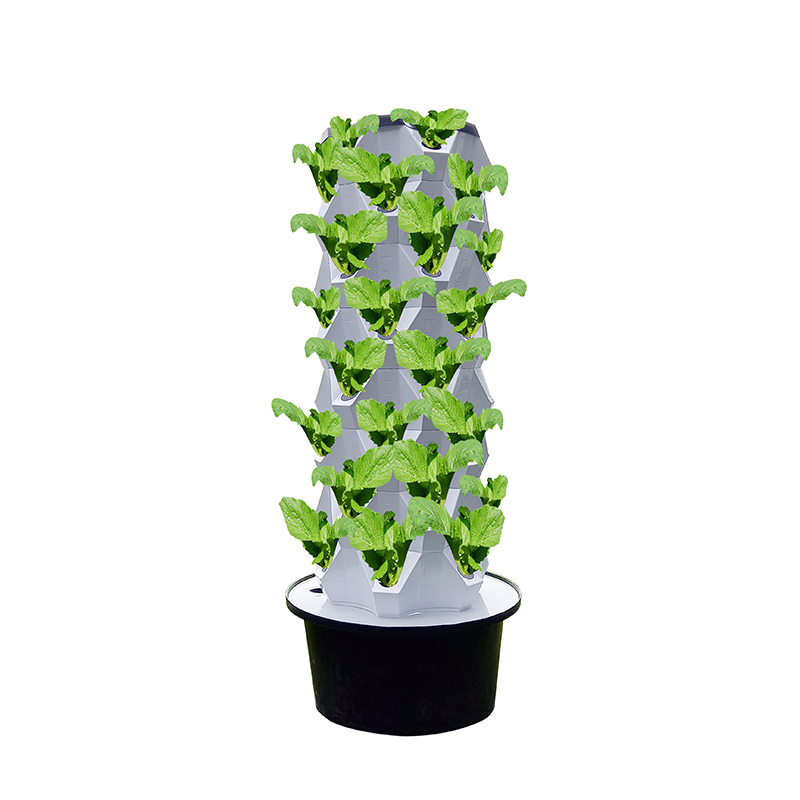
The Vertical Pineapple Tower is a space-efficient hydroponic growing system designed for vertical farming, home gardening, and commercial cultivation. Its multi-level structure allows growers to make better use of limited floor space while delivering water and nutrients to plants through a soilless growing system.
Designed for use in greenhouses, indoor gardens, rooftop farms, and urban agriculture projects, this hydroponic grow tower can support pineapples, leafy greens, herbs, and selected compact crops, depending on plant size and growing requirements. Its vertical design makes it a practical option for growers looking to expand planting capacity without significantly increasing their growing footprint.
Made from PVC according to the supplied product specifications, the PVC hydroponic tower features a modular structure for convenient installation, cleaning, and maintenance. It can also be incorporated into indoor growing setups with suitable LED grow lights, making it adaptable to different growing environments.


The vertical grow tower arranges planting positions across multiple levels, helping growers use vertical space more efficiently than conventional horizontal growing layouts. It is suitable for apartments, balconies, greenhouses, rooftop gardens, and other locations where available floor space is limited.
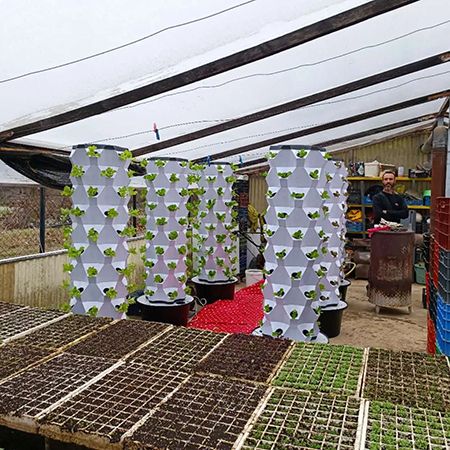
For commercial growers, multiple towers can be arranged together to create a scalable vertical hydroponic farming system.
The hydroponic grow tower uses a water and nutrient delivery system to supply plants with the nutrients they need. The recirculating setup can help reduce water waste compared with many traditional soil-based growing methods, depending on system design, crop selection, and operating conditions.
Proper nutrient concentration, water circulation, and root aeration remain important for maintaining healthy plant growth.
Constructed from PVC as specified, this PVC plant tower is designed for regular use in hydroponic growing environments. Its modular components make routine cleaning and maintenance more convenient.
For projects requiring food-contact or food-growing material compliance, buyers can request the relevant material specifications and supporting documentation before placing an order.
The modular tower design provides flexibility for different planting arrangements and growing environments. Growers can select a suitable configuration according to available space, crop type, plant size, and expected production requirements.
When planning a pineapple growing project, consider the mature size of pineapple plants and their root systems. Planting density should be determined by the selected tower configuration and the crop's actual space requirements.
The vertical hydroponic tower can be used in greenhouses, suitable outdoor growing areas, rooftop farms, and indoor farming spaces. For indoor use, compatible LED grow lights may be added when natural light is insufficient.
Outdoor installations should account for sunlight, temperature, wind exposure, drainage, and access to electricity and water.
A hydroponic tower system offers an alternative to traditional soil-based planting for growers who want to explore vertical cultivation. With appropriate assembly, nutrient management, and regular maintenance, it can serve both small-scale gardening and larger growing projects.
New growers should follow the recommended setup and maintenance instructions and monitor water levels, nutrient concentration, and plant health during cultivation.


The Vertical Pineapple Tower can be considered for a range of growing environments:
Home and Balcony Gardening: Make more efficient use of limited growing space for selected vegetables, herbs, and other suitable plants.
Greenhouse Cultivation: Incorporate vertical hydroponic towers into greenhouse layouts to increase the use of available growing space.
Indoor Hydroponic Farming: Combine the tower with suitable LED grow lights and environmental controls for indoor cultivation.
Rooftop and Urban Agriculture: Create compact growing areas in locations where conventional ground-level planting is difficult.
Educational and Demonstration Projects: Introduce students, visitors, and new growers to soilless cultivation and vertical farming principles.
Specialty Crop Production: Explore pineapple cultivation and other specialty crops after confirming plant spacing, root development, lighting, and growing-cycle requirements.
Choosing the right vertical hydroponic growing system involves more than planting capacity. The tower should match your crops, growing environment, maintenance routine, and production goals.
Our Vertical Pineapple Tower offers several practical advantages:
Space-efficient structure: Uses vertical space for multi-level planting.
Soilless cultivation: Delivers water and nutrients through a hydroponic system.
Modular design: Supports different growing layouts and project requirements.
Flexible installation: Suitable for selected indoor, greenhouse, rooftop, and outdoor applications.
Multiple crop possibilities: Can support pineapples and other suitable crops when growing conditions are appropriate.
Scalable planning: Multiple units can be arranged to suit the available area and cultivation plan.
For commercial projects, buyers should evaluate tower dimensions, planting positions, irrigation capacity, lighting requirements, and crop-specific spacing before selecting a configuration.
Before purchasing a vertical hydroponic tower, consider the following factors:
1. Crop type and plant size
Leafy greens and herbs generally have different spacing requirements from pineapple plants and other larger crops. Confirm that the planting positions and tower structure are suitable for your intended crops.
2. Growing location
Indoor installations may require LED grow lights and ventilation. Greenhouses and outdoor locations need appropriate temperature management, sunlight exposure, drainage, and weather protection.
3. Water circulation and nutrient management
Check how the system distributes nutrient solution, how excess water returns to the reservoir, and how the pump and irrigation components are maintained.
4. Tower dimensions and planting capacity
Select a height and configuration that fit the available space while allowing sufficient room for plant growth, harvesting, and routine maintenance.
5. Material and customization requirements
For a commercial purchase, confirm the actual construction material, available sizes, included components, power requirements, and whether customization is available.


The Vertical Pineapple Tower combines innovation, sustainability, and efficiency for modern hydroponic farming. Whether for an indoor hydroponic garden tower, a vegetable growing tower, or large-scale vertical tower farming, it is the perfect solution for growers seeking high yields with minimal space, water, and energy.
Upgrade your farming system today with the best hydroponic grow tower and explore the potential of vertical hydroponics for pineapples and other specialty crops.
A Vertical Pineapple Tower is a vertical hydroponic growing system designed to cultivate plants without conventional soil. It uses a multi-level structure to make efficient use of growing space and delivers water and nutrients through a hydroponic setup.
Pineapples can be explored as a hydroponic crop, but successful cultivation depends on plant size, root development, nutrient management, light, temperature, and growing time. The tower's planting positions and spacing should be checked carefully before using it for commercial pineapple production.
Depending on the tower design and planting space, suitable crops may include lettuce, leafy greens, herbs, and selected compact plants. Larger fruiting plants may require more space and additional structural support.
Yes, provided the installation has adequate lighting, ventilation, water access, and drainage. LED grow lights can be used when natural light is insufficient. Confirm the system's dimensions and electrical requirements before installing it indoors.
A recirculating hydroponic system can reduce water consumption compared with some soil-based growing methods because nutrient solution can be collected and reused. Actual savings depend on the system design, climate, crop, and operating practices.
It may be suitable for selected commercial growing projects, including greenhouse and urban farming applications. Buyers should assess crop spacing, planting density, irrigation performance, labor requirements, and expected production costs before scaling up.
Confirm the material, dimensions, planting capacity, irrigation components, pump specifications, power compatibility, installation requirements, and availability of replacement parts. For food-growing applications, request supporting documentation for any material safety claims.
Available customization depends on the manufacturer's product range. Contact us to confirm tower dimensions, number of levels, planting positions, irrigation configuration, and other requirements for your project.
Looking for a Vertical Pineapple Tower for home gardening, greenhouse cultivation, or a commercial hydroponic project? Contact us with your target crops, installation environment, required tower dimensions, and estimated order quantity.
Our team can help you evaluate a suitable vertical hydroponic growing solution based on your available space and cultivation requirements.

G and N is serving for more than 1,000 customers over 122 countries around the world, offering high-quality products and services to global customers.
Copyright © 2026 G AND N FORTUNE LIMITED All rights reserved.