
 English


News
Focus on G AND N FORTUNE LIMITED - Get to know the new information of the industry quickly!

2026-10-22 11:08:25
Hydroponic strawberries and regular strawberries can look and taste very similar, but the main difference lies in how they are grown. Hydroponic strawberries are cultivated without traditional soil, using a nutrient solution to provide the water and minerals plants need. Regular strawberries are commonly grown in soil or soil-based growing media.
Both methods can produce high-quality strawberries when growing conditions are well managed. However, they differ in irrigation, nutrient management, space utilization, and daily maintenance. Understanding these differences can help consumers make informed choices and help commercial growers select the right strawberry production method.
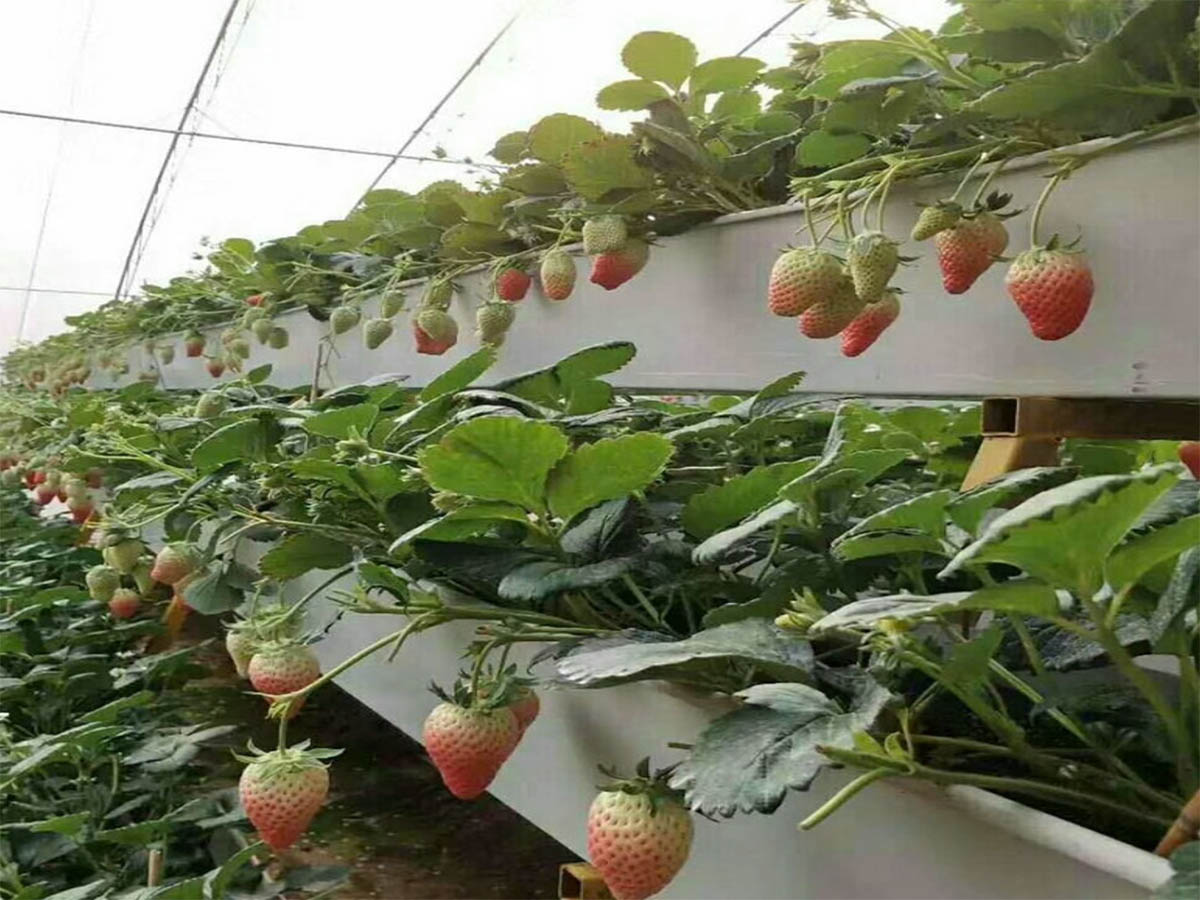
Hydroponic strawberries are grown using a soilless cultivation method. Instead of relying on garden soil, strawberry plants receive water and essential nutrients through a hydroponic growing system.
Depending on the setup, the plants may grow in channels, gutters, containers, or other growing structures filled with a suitable growing medium. Common media include coco coir, Perlite, and Rockwool. Some systems deliver nutrient solution directly to the roots, while others use growing media to support the plants and retain moisture.
A hydroponic strawberry growing system can be installed in a greenhouse or other controlled growing environment. Growers can monitor nutrient concentration, irrigation frequency, and growing conditions to support healthy plant development.
This method is particularly useful for commercial strawberry production where growers want more control over water and nutrient delivery.
Regular strawberries are generally grown in soil, either outdoors in open fields or in greenhouse beds. The soil provides physical support for the roots and serves as a source of water and nutrients.
Traditional strawberry farming relies on practices such as soil preparation, fertilization, irrigation, mulching, and pest management. The quality of the soil and the local climate can significantly affect plant growth and fruit development.
Soil-grown strawberries remain popular because the method is familiar to growers and can be practical in areas with suitable farmland and growing conditions. However, soil quality, drainage, and soilborne diseases may require careful management.
The most obvious difference is the growing environment.
Hydroponic strawberries grow without traditional field soil. Their roots receive water and nutrients through a carefully managed growing system, often with the support of a soilless medium.
Regular strawberries are typically planted in soil, where roots obtain water and nutrients from the surrounding growing environment.
Neither method automatically produces better fruit. Results depend on the strawberry variety, growing conditions, and the grower's management practices.
Do hydroponic strawberries taste different from regular strawberries? They can, but the growing method alone does not determine flavor.
Strawberry sweetness and aroma depend on factors such as variety, fruit maturity, temperature, sunlight, and nutrient management. Hydroponic systems allow growers to adjust irrigation and nutrient delivery, but poor management can still result in fruit with disappointing flavor.
Likewise, soil-grown strawberries can be exceptionally sweet when the variety and growing conditions are suitable.
When comparing strawberries, freshness, harvest maturity, and variety are often more useful indicators of taste than whether the plants were grown hydroponically or in soil.
Hydroponic strawberries are not automatically more nutritious than regular strawberries.
Both growing methods can produce strawberries containing vitamin C, fiber, and other beneficial nutrients. Their nutritional composition varies with the cultivar, ripeness, growing environment, and post-harvest handling.
A well-managed hydroponic strawberry farm can produce nutritious fruit, but conventional soil cultivation can do the same. Consumers should not assume that hydroponically grown strawberries are healthier simply because they are grown without soil.
Hydroponic strawberry farming allows growers to deliver water and nutrients through an irrigation system. In recirculating systems, excess nutrient solution may be collected and reused, depending on system design and water-quality management.
This can improve control over water and fertilizer use. However, the system requires monitoring of nutrient concentration, pH, water quality, and irrigation performance.
In traditional strawberry farming, water and fertilizer are managed through soil irrigation and fertilization practices. Soil properties influence how water and nutrients are retained and made available to plant roots.
Both methods require appropriate management to reduce waste and maintain healthy plants.
Hydroponic strawberries are often grown in elevated gutters, channels, containers, or multi-level structures. These arrangements can make harvesting and routine plant care more convenient while reducing the need to work directly at ground level.
For commercial growers, a well-planned hydroponic strawberry system can help organize plants in a greenhouse and make better use of the available growing area.
Traditional soil-grown strawberries are often planted in ground-level rows or raised beds. This approach can work well where land is readily available, although workers may need to bend or kneel during planting, maintenance, and harvesting.
Actual space efficiency depends on plant spacing, system layout, lighting, airflow, and access requirements.
Hydroponic cultivation can reduce exposure to some soilborne diseases because plants are not grown directly in field soil. Nevertheless, hydroponic strawberries are not free from disease or pest problems.
Root diseases can spread through contaminated water or growing media, while leaves and fruit may still be affected by fungal diseases, insects, and other pests. Clean water, proper sanitation, suitable airflow, and regular monitoring remain essential.
Soil-grown strawberries may face additional challenges from soilborne pathogens and soil conditions. Crop rotation, drainage management, mulching, and other agricultural practices can help reduce these risks.
The appropriate growing method depends on local disease pressure, available facilities, and the grower's ability to manage the production environment.
A traditional soil-based strawberry farm may require less specialized infrastructure when suitable land is already available.
A commercial hydroponic strawberry farm may require additional investment in growing gutters or channels, support structures, irrigation equipment, nutrient tanks, pumps, and greenhouse facilities. Automated monitoring and climate-control equipment can increase the initial cost further.
On the other hand, hydroponic systems may offer advantages in irrigation control, plant accessibility, and production organization. Whether these benefits offset the investment depends on labor costs, energy use, local climate, crop yield, market prices, and system design.
Growers should evaluate the total cost of ownership rather than comparing only the initial equipment price.
| Comparison Factor | Hydroponic Strawberries | Regular Strawberries |
|---|---|---|
| Growing environment | Soilless system with nutrient solution | Usually soil or soil-based beds |
| Root support | Often supported by a growing medium or growing structure | Supported by soil |
| Water and nutrient delivery | Managed through a hydroponic irrigation system | Managed through soil irrigation and fertilization |
| Flavor | Depends on variety, maturity, and growing conditions | Depends on variety, maturity, and growing conditions |
| Nutritional value | Can be nutritious; not inherently superior | Can be equally nutritious |
| Space utilization | Elevated gutters and channels can improve accessibility | Commonly grown in field rows or raised beds |
| Soilborne disease exposure | Reduced for some soil-related problems, but other diseases remain possible | May be affected by soilborne pathogens |
| Initial investment | May be higher due to specialized equipment | Can be lower where suitable farmland is available |
| Best suited to | Controlled production and growers seeking precise water and nutrient management | Field farming and growers with suitable soil and land |
There is no single answer for every farm. The better method depends on the production goals, available land, local climate, budget, and target market.
Hydroponic strawberry farming may be suitable for growers who want to manage irrigation and nutrient delivery more precisely, use elevated growing structures, or produce strawberries in a greenhouse.
It can also be attractive for commercial farms where labor efficiency, clean growing areas, and consistent production planning are important.
A suitable hydroponic strawberry growing system should be selected according to the strawberry variety, root-zone requirements, irrigation method, drainage design, and expected production scale.
Traditional soil cultivation can be a practical choice for growers with fertile, well-drained soil and access to suitable farmland. It avoids some of the specialized equipment required by hydroponic systems and may be more economical for farms already equipped for conventional strawberry production.
However, soil fertility, drainage, irrigation, and disease management still need to be carefully controlled.
Before choosing a method, commercial growers should compare expected yield, labor requirements, infrastructure costs, maintenance, and the selling price of their strawberries.
A commercial hydroponic strawberry setup may include several components, depending on the cultivation method and farm size.
Hydroponic Strawberry Gutters or channels: Support the growing arrangement and help manage root-zone drainage.
Growing containers or substrate holders: Hold the plants and suitable growing media.
Nutrient solution reservoir: Stores nutrient solution for systems designed around a reservoir.
Water pump and irrigation lines: Deliver water and nutrients to the plants.
Drainage or return lines: Collect excess solution where the system uses drainage or recirculation.
Support structures or growing benches: Keep plants at the intended height and spacing.
Monitoring equipment: Helps growers check parameters such as pH and electrical conductivity when required.
Not every hydroponic strawberry system uses the same configuration. Some systems use recirculating nutrient solutions, while others use drain-to-waste irrigation. Equipment should match the selected growing method and the needs of the crop.
For commercial projects, growers should also consider gutter dimensions, plant spacing, drainage performance, cleaning access, and compatibility with the greenhouse layout.
Not necessarily. Both can provide vitamin C, fiber, and other nutrients. Nutritional quality depends on variety, maturity, growing conditions, and handling rather than the growing method alone.
They can be sweet, but hydroponic cultivation does not guarantee a higher sugar content. Variety, sunlight, temperature, fruit maturity, and growing management all influence sweetness and flavor.
Yes. Hydroponic strawberries are grown without traditional soil. Depending on the system, plants may be supported by coco coir, perlite, rockwool, or other suitable growing media.
Hydroponic systems can support extended growing seasons, particularly in greenhouses with suitable environmental controls. However, year-round production depends on the strawberry variety, temperature, light, pollination, and other growing conditions.
It often requires more specialized equipment and infrastructure at the beginning. Operating costs and profitability vary according to labor, energy, water, maintenance, yield, and market prices.
The best system depends on the scale of production, strawberry variety, greenhouse layout, and budget. Gutter-based systems with suitable substrate and drainage are common options, but growers should evaluate root-zone conditions, irrigation uniformity, and ease of maintenance before choosing a design.
The main difference between hydroponic strawberries and regular strawberries is how the plants receive water, nutrients, and root support. Hydroponic cultivation offers greater control over nutrient delivery and can make elevated greenhouse production more practical, while traditional soil cultivation remains a reliable option where suitable farmland and growing conditions are available.
Neither method guarantees sweeter, healthier, or higher-quality fruit. Successful strawberry production depends on choosing suitable varieties and managing water, nutrients, temperature, light, disease, and harvest maturity.
For commercial growers considering hydroponic strawberry farming, selecting a growing system that matches the crop, greenhouse layout, and production goals is an important first step.

G and N is serving for more than 1,000 customers over 122 countries around the world, offering high-quality products and services to global customers.
Copyright © 2026 G AND N FORTUNE LIMITED All rights reserved.


