
 English

News
Focus on G AND N FORTUNE LIMITED - Get to know the new information of the industry quickly!

2026-10-14 14:34:10
Vertical hydroponic farming is a modern agricultural method that combines vertical growing structures with hydroponic technology to cultivate plants without soil. Instead of spreading crops across a single horizontal growing area, this method arranges plants in multiple layers, Vertical Towers, or stacked growing channels to make better use of available space.
A vertical hydroponic farming system delivers water and essential nutrients directly to plant roots through a controlled growing environment. Depending on the system design, it may use nutrient film technique (NFT), drip irrigation, or other hydroponic methods.
Vertical hydroponic farming is commonly used for lettuce, leafy greens, herbs, and selected fruit crops. It is suitable for commercial greenhouses, indoor farms, urban agriculture projects, and locations where growing space is limited.
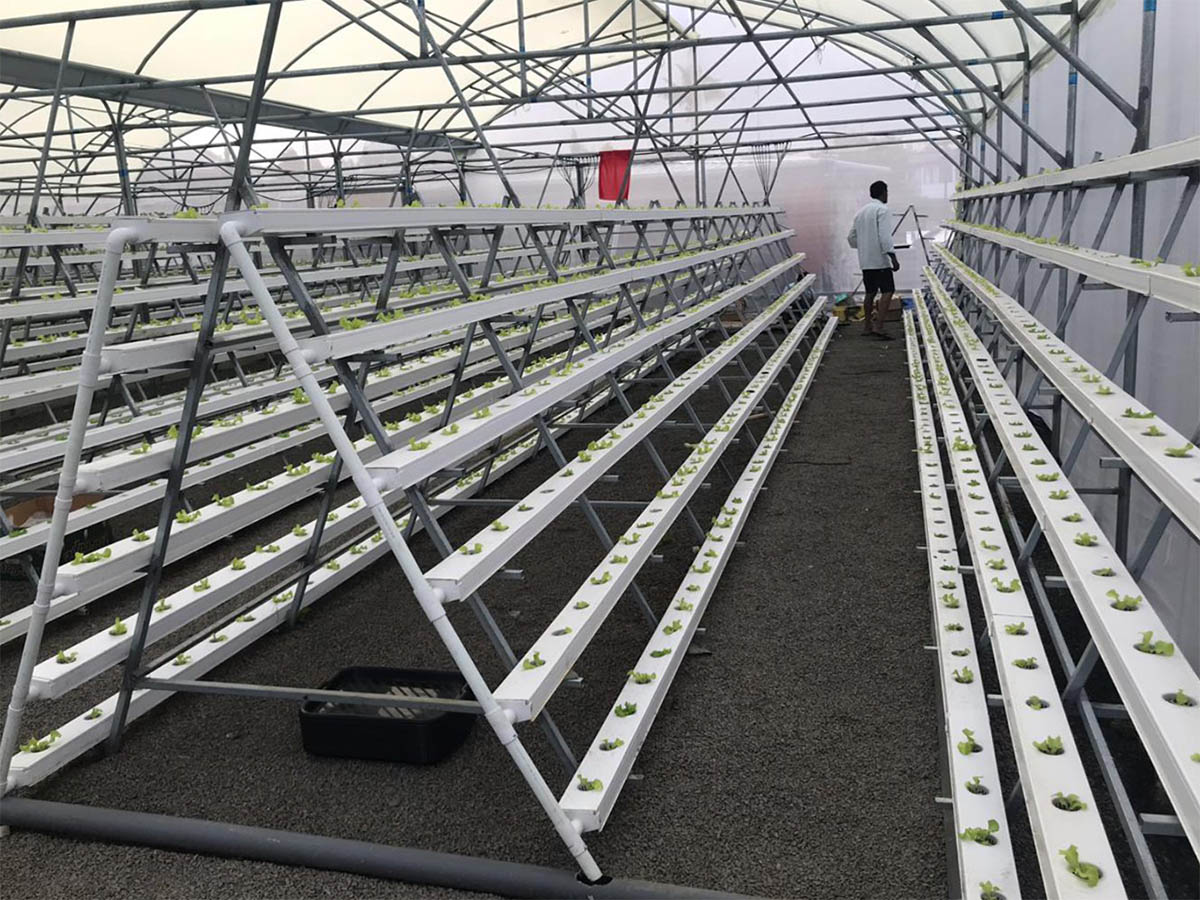
A vertical hydroponic system combines space-saving growing structures with water and nutrient delivery equipment. Its specific operation depends on the selected hydroponic method, crop type, and farm layout.
Plants are arranged in stacked channels, multi-tier racks, or vertical growing towers. This layout allows growers to use vertical space rather than relying entirely on floor area.
The structure must provide adequate support, access for maintenance, and enough space for plants to develop. Growing density should also account for light availability and air circulation.
Unlike soil-based cultivation, hydroponic farming supplies plants with water and dissolved nutrients directly. Pumps, pipes, and irrigation equipment distribute the solution to the growing areas.
Some systems continuously circulate nutrient solution, while others use timed irrigation. The appropriate method depends on the plant's root requirements and the system design.
Plant roots absorb the water and nutrients needed for growth. Growers can monitor important conditions such as pH, electrical conductivity (EC), water temperature, and nutrient concentration to maintain a suitable root environment.
In indoor vertical farms, artificial grow lights may also be used to provide the light required for photosynthesis.
Many vertical hydroponic systems collect and reuse excess nutrient solution. This can reduce water consumption compared with systems that do not recirculate water.
Regular monitoring, filtration, and sanitation remain important to maintain water quality and reduce the risk of root diseases.
Different vertical hydroponic systems serve different crop requirements and production environments.
A vertical NFT hydroponic system uses stacked growing channels to distribute a shallow film of nutrient solution along the root zone. The channels are typically installed with a slight slope to support nutrient flow and drainage.
This system is commonly used for lettuce and other leafy greens. NFT hydroponic channels can be arranged in multiple tiers to increase growing capacity while maintaining an organized production layout.
A vertical tower hydroponic system places plants in openings distributed along a vertical column or tower. Nutrient solution is generally delivered from the top or through an internal distribution system.
Tower systems can be useful where floor space is limited. Their suitability depends on crop size, root development, light exposure, and the ability to distribute water evenly across planting positions.
A multi-tier indoor hydroponic system uses several layers of growing racks, often combined with LED grow lights, climate control, and automated irrigation.
These systems are commonly used in indoor farms and controlled-environment agriculture facilities. They can support year-round production, although lighting, cooling, ventilation, and electricity costs need careful consideration.
A vertical drip hydroponic system delivers nutrient solution through drip lines to plants arranged in vertical structures. Depending on the setup, plants may be grown in suitable substrates rather than directly in open channels.
This approach can be suitable for certain crops that require more root support or a different moisture management strategy than NFT systems provide.
One of the main advantages of vertical hydroponic farming is its ability to use vertical space. Multiple growing layers can increase the planting area available within a given building or greenhouse footprint.
The actual production capacity depends on crop spacing, tier height, light distribution, and access requirements.
Many vertical hydroponic systems recirculate nutrient solution, allowing water to be reused. With proper system design and maintenance, this can reduce water waste and improve control over irrigation.
Hydroponic systems allow growers to manage nutrient delivery directly. In indoor facilities, environmental controls can also help regulate temperature, humidity, and lighting.
These controls can improve consistency, but they require appropriate monitoring and reliable equipment.
Vertical growing structures can make planting, inspection, and harvesting more systematic. Standardized growing channels and irrigation layouts can also simplify maintenance and farm management.
Indoor vertical hydroponic farms can produce crops throughout the year when lighting, temperature, humidity, and nutrient conditions are properly managed. Production stability still depends on equipment reliability, crop selection, and operating costs.
Vertical hydroponic farming is particularly suitable for crops that can grow well in compact spaces and do not require excessively large root zones.
Common choices include:
Lettuce: Frequently cultivated in vertical NFT systems and multi-tier growing channels.
Spinach: Suitable for appropriately designed hydroponic systems with adequate root space and nutrient management.
Basil and other herbs: Often grown in towers, channels, or indoor hydroponic racks.
Arugula and leafy greens: Common options for commercial hydroponic production.
Strawberries: Can be grown in selected vertical hydroponic systems designed to support fruiting plants and manage their root requirements.
Not every crop performs equally well in a vertical setup. Growers should consider plant height, root size, light demand, airflow, and harvesting requirements before selecting a system.
Choosing the right vertical hydroponic farming system requires balancing crop requirements, available space, installation costs, and production targets.
Determine whether an NFT Channel system, vertical tower, drip system, or multi-tier rack is best suited to the intended crops. Leafy greens may work well in NFT channels, while other crops may require different root support or irrigation arrangements.
For systems using NFT channels, material quality, wall thickness, channel dimensions, and drainage design are important considerations. PVC NFT hydroponic channels are commonly used because they are lightweight and can be manufactured in different sizes.
For commercial projects, buyers should also evaluate UV resistance where relevant, ease of cleaning, planting hole specifications, and compatibility with the planned growing structure.
In multi-tier systems, upper layers may receive different amounts of light than lower layers. Growers should plan suitable lighting and airflow to help maintain more consistent growing conditions throughout the structure.
Reliable nutrient delivery is essential for hydroponic cultivation. Pump capacity, pipe dimensions, channel slope, and return drainage should be designed together to reduce uneven flow and water accumulation.
Commercial growers should consider how easily channels, pumps, filters, and irrigation components can be accessed for cleaning and repair. A modular layout may also make it easier to expand the growing area as production requirements change.
Vertical hydroponic farming differs from traditional soil-based farming in space utilization, nutrient delivery, and infrastructure requirements.
| Feature | Vertical Hydroponic Farming | Traditional Soil Farming |
|---|---|---|
| Growing Method | Plants grow without soil | Plants grow in soil |
| Space Utilization | Uses vertical layers or towers | Commonly uses horizontal growing areas |
| Nutrient Delivery | Nutrients supplied through water | Nutrients supplied through soil and fertilizers |
| Water Management | Often uses controlled irrigation and recirculation | Depends on rainfall, irrigation, and soil conditions |
| Growing Environment | May use controlled indoor or greenhouse conditions | Often more exposed to outdoor weather |
| Initial Investment | Can require specialized equipment and infrastructure | Depends on land, irrigation, and cultivation methods |
| Suitable Crops | Often leafy greens, herbs, and selected fruit crops | A broad range of crops |
Vertical hydroponic farming can improve space utilization and nutrient management, but it usually requires more specialized infrastructure than basic soil cultivation. The best approach depends on the crop, local climate, available land, and economic objectives.
Vertical farming refers to growing crops in vertically arranged layers or structures. Vertical hydroponic farming specifically uses hydroponic techniques to supply water and nutrients without soil. Vertical farming can also use other growing methods, including substrates.
Yes. It can be used for commercial production of lettuce, herbs, and other suitable crops. Success depends on system design, crop selection, environmental management, labor, energy costs, and market demand.
No. Hydroponic systems deliver nutrients through water rather than soil. Some systems use growing plugs or substrates to support plants, but soil is not required.
Yes. NFT hydroponic channels can be installed in stacked arrangements to create a vertical growing system. The layout should provide suitable nutrient flow, drainage, root space, lighting, and access for maintenance.
Many systems recirculate nutrient solution, which can reduce water consumption. Actual water efficiency depends on system design, leakage, evaporation, crop demand, and maintenance practices.
Vertical hydroponic farming combines vertical growing structures with soilless cultivation to make better use of available space and manage water and nutrients more directly. It is particularly suitable for leafy greens, herbs, and selected crops grown in commercial greenhouses or indoor farming facilities.
Choosing the right vertical hydroponic system requires careful consideration of crop requirements, growing channels, water circulation, lighting, and maintenance. For projects using NFT technology, durable and properly designed NFT hydroponic channels are important components of an efficient growing system.
If you are planning a commercial hydroponic project, selecting the right channel dimensions, planting hole layout, and system configuration can help create a practical growing solution tailored to your production needs.

G and N is serving for more than 1,000 customers over 122 countries around the world, offering high-quality products and services to global customers.
Copyright © 2026 G AND N FORTUNE LIMITED All rights reserved.


