
 English

News
Focus on G AND N FORTUNE LIMITED - Get to know the new information of the industry quickly!

2026-07-23 12:03:25
With the development of modern agriculture, hydroponics and aquaponics have become two popular soilless growing methods that help farmers produce fresh vegetables with less land and water compared with traditional farming.
Although both systems allow plants to grow without soil, the biggest difference is their nutrient source. Hydroponics uses a prepared nutrient solution to feed plants directly, while aquaponics combines fish farming and hydroponics by using fish waste as a natural nutrient source for plants.
Understanding the difference between hydroponics vs aquaponics can help growers choose the right system for home gardening, greenhouse production, or commercial farming.
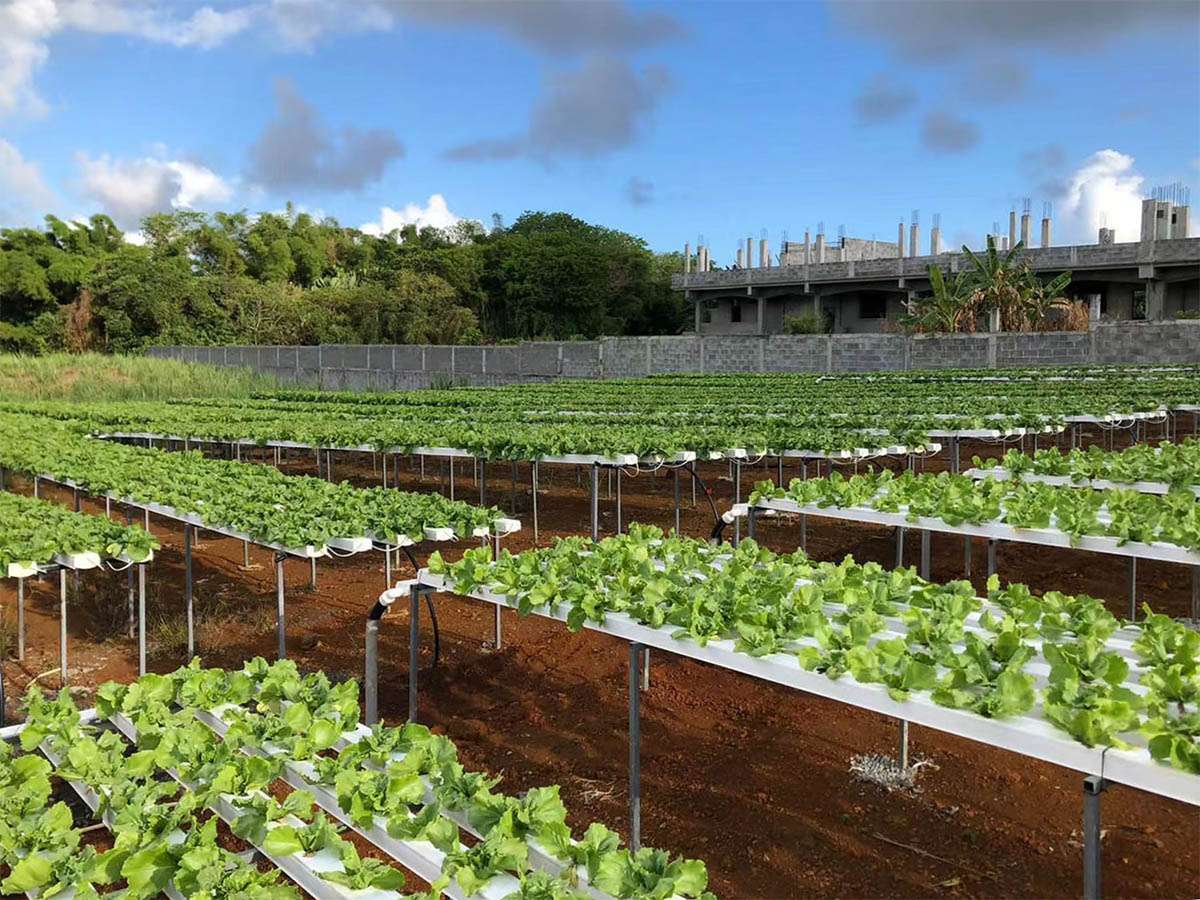
Hydroponics is a soilless cultivation method where plants grow in water-based nutrient solutions instead of soil. The plant roots receive essential nutrients directly from the water, allowing plants to grow efficiently in a controlled environment.
Unlike traditional agriculture, a hydroponic system does not rely on soil quality. Instead, growers control important factors such as:
Nutrient concentration
pH level
Water temperature
Oxygen supply
Lighting conditions
This makes hydroponics one of the most efficient methods for modern indoor farming and commercial vegetable production.
A typical hydroponic system works by delivering nutrient-rich water directly to plant roots.
The basic process includes:
Water is mixed with specially formulated nutrients.
A pump delivers the nutrient solution to the growing area.
Plant roots absorb water and minerals.
Excess solution is collected and recycled.
Common types of hydroponic systems include:
An NFT hydroponic system (Nutrient Film Technique) uses a thin layer of nutrient solution flowing continuously through growing channels.
It is widely used for:
Lettuce
Leafy vegetables
Herbs
Common components include:
Water pumps
Reservoir tanks
An ebb and flow system works through automatic flooding and draining cycles.
The growing tray is periodically filled with nutrient solution and then drained back into a reservoir.
Advantages include:
Efficient water use
Better root oxygenation
Suitable for seedlings and vegetables
A vertical hydroponic system uses vertical growing structures to maximize limited space.
It is commonly used for:
Indoor gardening
Urban farming
Commercial vertical farming
Aquaponics is a farming system that combines aquaculture (fish farming) with hydroponics.
In an Aquaponic System, fish and plants work together in a natural cycle:
Fish produce waste → bacteria convert waste into nutrients → plants absorb nutrients → plants clean the water → water returns to fish tanks.
This creates a sustainable ecosystem where both fish and plants can grow together.
A typical aquaponics system includes:
Fish tank
Water pump
Biological filter
Plant growing area
Water circulation system
The process works as follows:
Fish produce organic waste in the water.
Beneficial bacteria convert fish waste into plant nutrients.
Plants absorb these nutrients for growth.
Clean water returns to the fish tank.
This continuous cycle reduces water waste and creates a more natural growing environment.
The biggest difference between hydroponics and aquaponics is where plants get their nutrients.
Plants receive nutrients from a manufactured nutrient solution.
Plants receive nutrients from fish waste that is naturally converted by bacteria.
Hydroponic systems are generally easier to control because growers can directly adjust nutrient levels.
Aquaponic systems require management of:
Fish health
Water quality
Bacteria balance
Plant growth
Therefore, aquaponics usually requires more knowledge and maintenance.
Mainly focuses on plant production.
Suitable for:
Commercial vegetable farms
Greenhouses
Indoor farming
Produces both:
Fish
Vegetables
Suitable for growers interested in integrated farming.
Both systems use significantly less water than traditional soil farming.
Water is continuously recycled through the growing system.
Water circulates between fish tanks and plant growing areas.
Both methods are considered water-efficient agricultural solutions.
Because nutrients are delivered directly to plant roots, plants can absorb nutrients more efficiently.
Growers can precisely manage:
Nutrient levels
pH balance
Water conditions
Hydroponics is widely used in:
Greenhouses
Indoor farms
Vertical farming projects
Commercial systems such as NFT hydroponic systems, vertical hydroponic systems, and ebb and flow systems provide reliable solutions for large-scale production.
Aquaponics creates a natural relationship between fish and plants.
Fish waste becomes plant nutrients, while plants help filter the water.
Aquaponics allows farmers to produce:
Vegetables
Fish
from one integrated system.
Because nutrients come from fish waste, aquaponics can reduce dependence on synthetic fertilizers.
The best choice depends on your farming goals.
Higher production control
Faster plant growth
Commercial vegetable production
Easier system management
Hydroponics is often preferred for professional growers who focus on crop yield and efficiency.
A natural ecosystem
Fish and vegetable production together
Sustainable small-scale farming
Aquaponics is a good option for educational projects, hobby farms, and eco-friendly agriculture.
Both systems are used in modern agriculture, including:
Indoor farming
Greenhouse cultivation
Urban agriculture
Home gardening
Commercial food production
Popular hydroponic applications include:
Lettuce hydroponics
Strawberry hydroponic systems
Herb growing systems
Vertical farming systems
The main difference between hydroponics and aquaponics is the way plants receive nutrients. Hydroponics uses a specially prepared nutrient solution, while aquaponics uses nutrients generated from fish waste through a natural biological cycle.
For commercial vegetable production, hydroponics offers better control, higher efficiency, and easier management. For sustainable farming that combines fish and plant production, aquaponics provides an environmentally friendly solution.
Both hydroponic systems and aquaponic systems are important technologies for the future of modern agriculture, helping growers save space, reduce water consumption, and achieve more efficient food production.

G and N is serving for more than 1,000 customers over 122 countries around the world, offering high-quality products and services to global customers.
Copyright © 2026 G AND N FORTUNE LIMITED All rights reserved.


