
 English


News
Focus on G AND N FORTUNE LIMITED - Get to know the new information of the industry quickly!

2026-11-11 15:05:21
A vertical crab farming system is a space-efficient aquaculture solution that uses multiple levels of individual or modular growing units to raise crabs within a compact area. Instead of relying entirely on traditional ponds or large open tanks, this system arranges crab farming boxes, tanks, or compartments vertically to make better use of available floor space.
But how does a vertical crab farming system work? The basic principle is to provide each crab with a suitable living environment while integrating feeding, water circulation, filtration, and waste management into an organized farming setup.
Depending on the design, a vertical crab farming system can use individual crab containers, multi-tier racks, water supply pipes, drainage channels, and a centralized filtration system. These components work together to support daily feeding, water quality control, and crab growth.
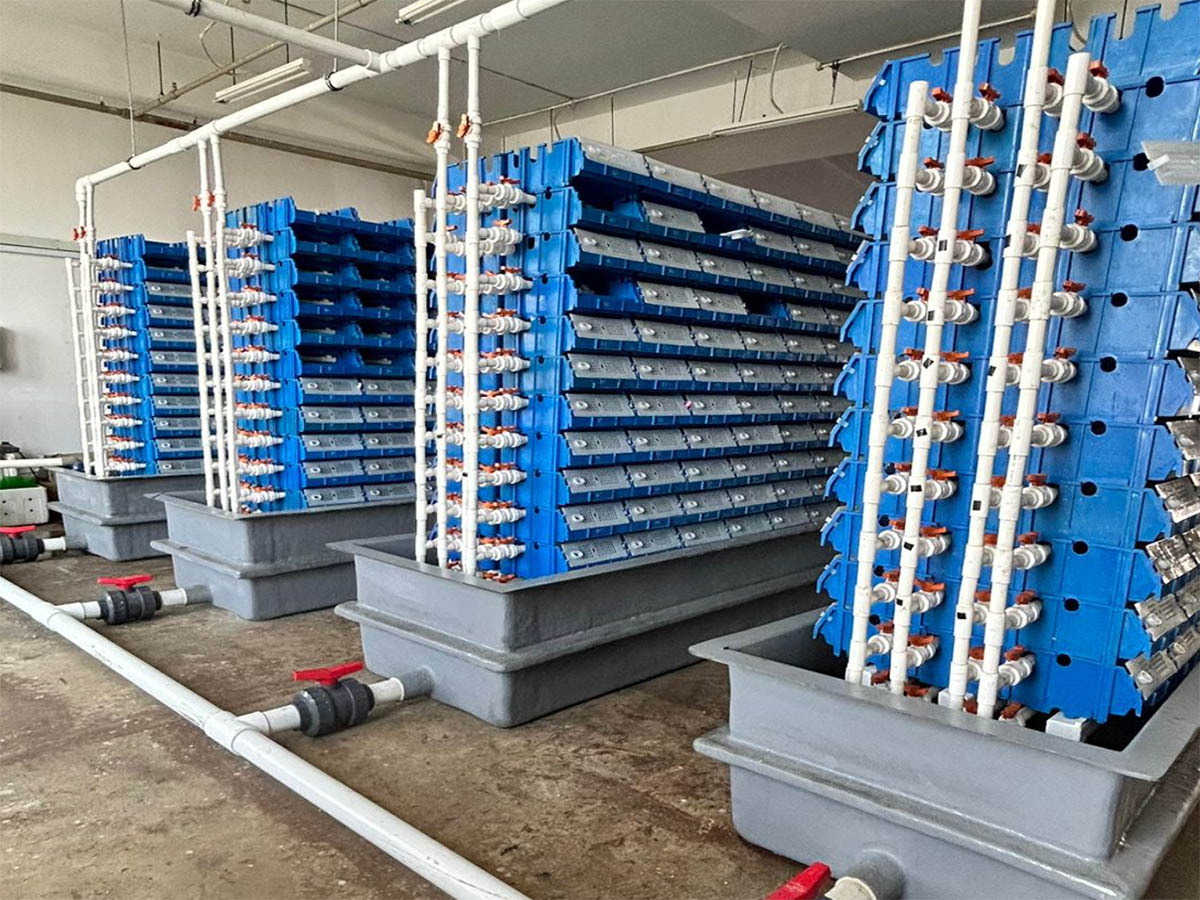
A vertical crab farming system is a modern aquaculture setup designed to increase farming capacity by arranging crab-rearing units in multiple layers.
In traditional crab farming, crabs are commonly raised in ponds, coastal enclosures, or large tanks. These methods may require considerable land or water surface area. A vertical crab farming system uses stacked or tiered structures to make more efficient use of indoor or controlled farming spaces.
Depending on the target species and farming method, the system may include:
Multi-tier crab farming racks
Individual Crab Farming Boxes
Water supply and drainage pipes
Water filtration equipment
Aeration equipment
Water quality monitoring devices
Feeding and maintenance access areas
Some systems use individual compartments to separate crabs during the growing or fattening stage. This arrangement can help reduce direct contact and aggressive interactions between animals.
Vertical crab farming is particularly relevant to indoor aquaculture projects where available floor space is limited and environmental conditions need to be managed more closely.
A vertical crab farming system works by combining space-efficient housing structures with a coordinated water management process.
Although system designs vary, the general operating process involves housing crabs in individual or separated units, supplying suitable water, removing waste, and maintaining appropriate environmental conditions.
The first step is placing crabs into designated farming boxes, tanks, or compartments.
In many multi-tier crab farming systems, individual containers are arranged on several levels of a supporting rack. Each compartment provides a separate space for a crab, depending on the species, size, and farming objectives.
Individual housing can offer several practical benefits:
Reduces direct fighting between crabs
Helps limit injuries caused by aggressive interactions
Makes feeding and observation more manageable
Allows farmers to monitor individual growth
Simplifies the separation of crabs by size or condition
The dimensions and design of crab farming boxes should match the biological and behavioral requirements of the target species.
Water supply is an essential part of a vertical crab farming system.
Depending on the design, water may be distributed from a centralized tank or water treatment unit through a network of pipes. Water then enters individual Crab Boxes or farming compartments.
A well-designed water distribution system should provide consistent water supply across different levels of the structure.
For commercial indoor crab farming, the water supply arrangement needs to consider:
Number of farming compartments
Total water demand
Pipe diameter and layout
Water pressure and flow distribution
Accessibility for cleaning and maintenance
The exact water supply configuration depends on the system design and the requirements of the crab species being raised.
Crabs require suitable water conditions throughout the farming cycle. Uneaten feed, feces, and other organic waste can gradually affect water quality.
A vertical crab farming system may integrate mechanical filtration, biological filtration, and other water treatment equipment to manage waste and maintain suitable water conditions.
Mechanical filtration helps remove suspended solid particles. Biological filtration uses beneficial microorganisms to convert harmful ammonia into less toxic nitrogen compounds through nitrification.
Depending on the system, additional treatment equipment may be used to manage dissolved substances and other water quality parameters.
Common water management components include:
Mechanical filters
Biological filters
Water pumps
Aeration equipment
Water quality monitoring devices
Water treatment tanks
For systems using recirculating aquaculture technology, treated water can be returned to the farming units for reuse.
As crabs grow, uneaten feed and metabolic waste accumulate inside the farming units.
A suitable drainage design helps collect wastewater and transport it away from the crab compartments. The collected water may then pass through filtration and treatment equipment before being reused, depending on the system configuration.
Proper drainage helps reduce waste accumulation and makes regular cleaning more efficient.
When designing a multi-tier crab farming system, drainage pipes and outlets should be arranged to avoid blockages, leakage, and uneven wastewater collection.
Feeding is another important part of vertical crab farming.
Feed type, feeding frequency, and feeding quantity should be adjusted according to the crab species, size, growth stage, and farming objectives.
Individual crab farming boxes can make it easier to observe feeding behavior and identify changes in appetite or activity.
Farmers should regularly check:
Feed consumption
Crab activity and growth
Molting condition
Signs of injury or disease
Water quality
Waste accumulation
Regular monitoring helps farmers identify potential problems before they affect a larger portion of the farming operation.
When crabs reach the required market size or target condition, they can be removed from their individual farming units.
The individual compartment design may simplify harvesting because farmers can access specific crabs without disturbing an entire pond or tank.
Harvesting criteria depend on the target species, market requirements, and farming purpose.
A commercial vertical crab farming system typically consists of several interconnected components. Each component serves a different purpose in supporting the farming operation.
| Component | Main Function |
|---|---|
| Crab Farming Boxes | Provide individual or separated spaces for raising crabs. |
| Multi-Tier Racks | Support multiple levels of crab farming units. |
| Water Supply Pipes | Distribute water to different farming compartments. |
| Drainage System | Collect and remove wastewater. |
| Water Pump | Circulate water throughout the system. |
| Mechanical Filter | Remove suspended solids and physical waste. |
| Biological Filter | Support beneficial bacteria that process ammonia. |
| Aeration Equipment | Helps maintain suitable dissolved oxygen levels. |
| Monitoring Equipment | Measures important water quality parameters. |
The configuration of these components varies according to farming scale, crab species, available space, and water management requirements.
A recirculating aquaculture system (RAS) is a water management approach that treats and reuses water instead of continuously replacing the entire water supply.
When integrated into a vertical crab farming system, RAS technology can help manage water quality while reducing the need for frequent water replacement.
A typical recirculating aquaculture system includes the following stages:
Water Collection: Water from crab farming units is collected through drainage pipes.
Mechanical Filtration: Suspended solids and larger waste particles are removed.
Biological Filtration: Beneficial bacteria convert ammonia into less harmful nitrogen compounds.
Additional Water Treatment: Depending on system requirements, aeration, disinfection, or other treatment processes may be included.
Water Return: Treated water is pumped back to the farming units.
A recirculating system does not eliminate the need for water monitoring or maintenance. Farmers still need to manage water quality, remove accumulated solids, and replace water when necessary.
A multi-tier crab farming system offers several potential advantages for indoor and commercial aquaculture operations.
By arranging crab farming boxes vertically, farmers can increase the number of farming units within a given floor area.
This can be particularly useful for indoor facilities, urban aquaculture projects, and farms with limited land availability.
Individual crab farming boxes provide separated living spaces that can help reduce fighting and cannibalism associated with direct contact between crabs.
They also make it easier to observe individual animals and manage feeding activities.
A modular vertical crab farming system can organize feeding, water supply, drainage, and harvesting into a more structured layout.
This may improve access to individual farming units and simplify routine maintenance.
When connected to a suitable water treatment system, multiple farming units can share centralized filtration and water circulation equipment.
This arrangement can make water treatment more organized, although the system must be properly sized for its total biomass and waste load.
Modular crab farming boxes and multi-tier racks can be arranged according to the available facility space and farming capacity.
The number of levels, compartment dimensions, and water distribution layout can be adjusted to meet different project requirements.
Vertical crab farming and traditional crab farming use different approaches to space utilization and animal housing.
| Comparison | Vertical Crab Farming | Traditional Crab Farming |
|---|---|---|
| Farming Structure | Multi-tier racks or stacked units | Ponds, enclosures, or large tanks |
| Space Utilization | Uses vertical space | Mainly uses horizontal space |
| Crab Housing | May use individual compartments | Often uses shared farming areas |
| Management | More structured individual management | Often requires pond-level management |
| Water Management | May integrate centralized filtration and circulation | Depends on pond or tank design |
| Suitable Environment | Indoor or controlled facilities | Outdoor or indoor facilities |
| Initial Setup | Requires racks and specialized equipment | Depends on pond or tank construction |
Neither method is suitable for every farming situation. The right approach depends on crab species, production goals, investment budget, available space, and operational capabilities.
Choosing suitable crab farming equipment is essential when planning a vertical crab farming project.
Before purchasing a system, consider the following factors.
Different crab species have different requirements for salinity, temperature, dissolved oxygen, shelter, and living space.
For example, mud crabs and swimming crabs may require different farming conditions and compartment designs. Equipment should be selected according to the target species rather than assuming that one setup fits all crabs.
Crab farming boxes should provide sufficient space for the animals and allow convenient feeding, observation, and cleaning.
Consider box dimensions, material, drainage openings, water inlet design, and ease of access.
Multi-tier racks need to support the combined weight of farming boxes, water, and crabs.
The structure should be designed for the actual operating load, with suitable stability, corrosion resistance, and maintenance access.
The water treatment system should be sized according to total water volume, stocking biomass, feeding rate, and expected waste production.
Insufficient filtration or uneven water distribution can affect farming conditions across different levels.
Regular cleaning is necessary to remove waste and maintain suitable water conditions.
Choose equipment with accessible compartments, convenient drainage, and a practical maintenance layout.
A vertical crab farming system is an aquaculture setup that uses multi-level racks and individual or separated farming units to raise crabs while making more efficient use of available floor space.
Crabs are raised in individual boxes or separated compartments arranged on multiple levels. Water is supplied through a distribution system, while wastewater is collected and may be treated through filtration equipment before being reused in a recirculating system.
The system may be adapted for different crab species, including mud crabs and other commercially farmed crabs. However, compartment design, water conditions, and stocking arrangements must be adjusted according to the biological requirements of each species.
Yes. Vertical crab farming is often considered for indoor aquaculture because its multi-tier structure can make efficient use of limited floor space. Indoor facilities also provide opportunities for more controlled water management.
Common equipment includes crab farming boxes, multi-tier racks, water supply and drainage pipes, water pumps, filtration equipment, aeration devices, and water quality monitoring tools.
Not every vertical crab farming system uses RAS. However, a recirculating aquaculture system can be integrated to filter and reuse water, helping manage water consumption and maintain suitable water conditions.
Individual or separated crab compartments can help reduce direct contact between crabs, which may lower the risk of fighting and cannibalism. However, proper compartment design, feeding, and environmental management are still necessary.
Profitability depends on crab species, seed or juvenile costs, survival rate, feed expenses, equipment investment, electricity consumption, labor, and market prices. A feasibility assessment and small-scale trial are recommended before expanding to commercial production.
A vertical crab farming system combines multi-tier farming structures, individual crab compartments, and organized water management to make better use of available space. By integrating suitable crab farming boxes, water distribution, drainage, filtration, and monitoring equipment, farmers can establish a more structured indoor or commercial aquaculture operation.
The success of a vertical crab farming project depends on more than the number of farming levels. Proper compartment design, species-specific environmental conditions, reliable water circulation, and regular maintenance are all essential.
Whether you are planning a small indoor crab farming setup or a larger commercial project, selecting the right crab farming equipment and system configuration is an important first step.
Contact us to learn more about vertical crab farming equipment and customized aquaculture system solutions.

G and N is serving for more than 1,000 customers over 122 countries around the world, offering high-quality products and services to global customers.
Copyright © 2026 G AND N FORTUNE LIMITED All rights reserved.


