
 English

News
Focus on G AND N FORTUNE LIMITED - Get to know the new information of the industry quickly!

2026-04-01 16:04:03
Pruning is one of the most important maintenance tasks in any vertical farming setup. Whether you are managing an indoor garden, a commercial agricultural greenhouse, or a modern hydroponics greenhouse, proper pruning helps plants grow healthier, improves airflow, increases light penetration, and supports better yields.
In a hydroponics system, plants often grow faster than they do in soil because nutrients and water are delivered directly to the roots through a controlled irrigation system. This fast growth is a major benefit of a hydroponic growing system, but it also means regular pruning is necessary to keep the entire growing system balanced and productive.
This guide explains how to prune plants in a vertical hydroponic system, when to prune, which parts to remove, and how pruning techniques differ depending on the crop and the type of hydroponics equipment you use, such as a hydroponic nft system, hydroponic gutter, Strawberry Gutter, pvc gutter, pvc channel, or hydroponic NFT Channel.
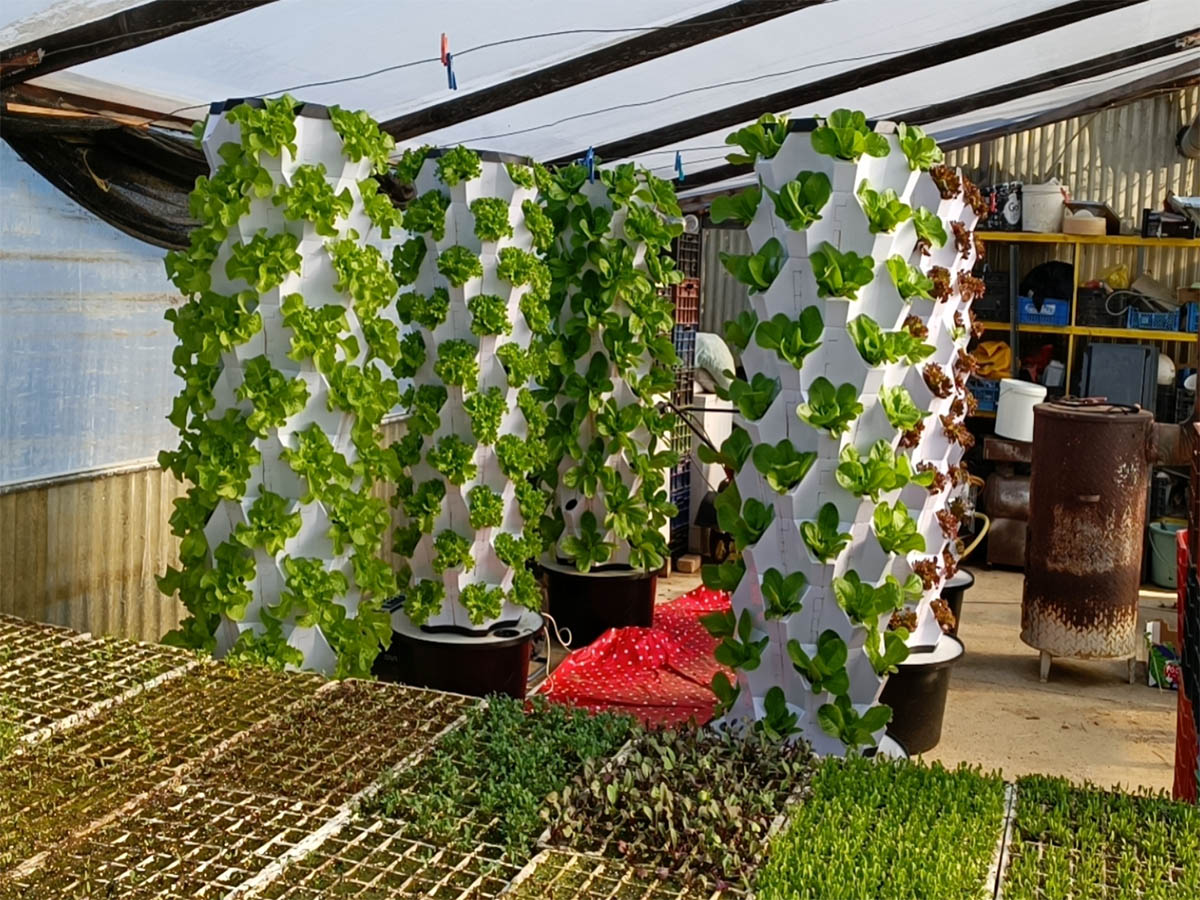
A vertical hydroponic setup is designed to maximize production in limited space. In indoor hydroponics and greenhouse hydroponics, plants are often grown close together to improve efficiency. However, if leaves, stems, runners, or side shoots are not managed properly, overcrowding can become a problem.
Pruning provides several important benefits:
In a layered vertical farming environment, upper leaves can block light from reaching lower leaves or neighboring plants. By removing old or oversized leaves, growers can improve light exposure across the system.
Poor airflow increases humidity around the plant canopy, especially in an agricultural greenhouse or hydroponics greenhouse. This can encourage fungal diseases, mold, and leaf rot. Pruning creates more open space around plants.
Yellow leaves, damaged stems, and decaying plant tissue can attract pests and disease. In a closed hydroponic system, problems can spread quickly, so removing unhealthy parts early is essential.
Plants naturally send energy to many growing points. Pruning helps redirect that energy toward stronger stems, better fruit production, larger leaves, or more uniform harvests.
In systems using a hydroponic gutter, pvc gutter, strawberry gutter, or hydroponic NFT channel, overgrown roots, leaves, and runners can interfere with water flow or clog channels. Good plant management keeps the nft system or other hydroponics growing system operating smoothly.
Not every crop is pruned in the same way. In a hydroponic growing system, pruning methods depend on plant growth habits.
Common crops that benefit from pruning include:
Lettuce
Basil
Mint
Kale
Spinach
Tomatoes
Cucumbers
Peppers
Strawberries
Herbs and leafy greens used in horticulture
Leafy greens usually need light maintenance, while fruiting crops often need more active structural pruning. Strawberry plants in a strawberry gutter or leafy greens in a hydroponic nft system may need different pruning schedules.
The best time to prune depends on the plant variety, growth stage, and environment. In general, pruning should begin once the plant is well established and has enough healthy foliage to continue growing strongly.
After seedlings are rooted and actively growing
When lower leaves begin yellowing
When plants become too dense
When side shoots start to compete with the main stem
When runners appear on strawberry plants
Before diseased tissue spreads to healthy growth
In an indoor hydroponics setup, growers can monitor plants daily and prune on a regular schedule. In larger greenhouse hydroponics operations, pruning is often part of weekly crop management.
Avoid heavy pruning immediately after transplanting or when plants are under stress from temperature fluctuations, nutrient imbalance, or root issues in the hydroponic system.
Using clean tools is critical in any hydroponics system because pathogens can spread quickly through shared water and plant contact.
Recommended tools include:
Sharp pruning scissors
Fine-tip trimming snips
Sterilized pruning shears
Disposable gloves
Clean cloth or paper towels
Food-safe disinfectant or alcohol for tool cleaning
When working in a hydroponics greenhouse, indoor garden, or commercial agricultural greenhouse, always disinfect tools between plant groups, especially if you notice disease symptoms.
Before discussing crop-specific pruning, here are some universal pruning principles for any hydroponic growing system:
These leaves no longer contribute to photosynthesis and can become a source of disease.
In most cases, do not remove more than 20% to 30% of the plant at one time. Over-pruning can shock the plant and slow growth.
Avoid tearing stems or leaves by hand. Clean cuts heal faster and reduce the chance of infection.
Frequent light pruning is better than occasional heavy pruning, especially in a compact vertical farming structure.
In some nft growing system setups, excessive foliage can indicate strong growth above while roots may still need monitoring below. Always balance canopy management with root condition, nutrient flow, and oxygen supply.
Leafy greens are common in a hydroponic nft system because they grow quickly and adapt well to shallow nutrient flow. In an nft system, plants are often grown in a hydroponic nft channel, pvc channel, or pvc gutter, where space is limited and canopy control is important.
Lettuce usually requires simple maintenance pruning:
Remove outer leaves that are yellow, damaged, or touching wet surfaces
Thin crowded leaves to improve airflow
Harvest outer leaves first if using a cut-and-come-again method
Do not cut the central growing point unless you are harvesting the whole head.
For kale and spinach in a hydroponic system:
Remove older lower leaves regularly
Cut leaves close to the base without damaging the central stem
Keep the crown open for better air circulation
Basil benefits greatly from pruning:
Pinch the top growth just above a leaf node
Encourage branching by removing the top pair of leaves
Continue pruning regularly to prevent early flowering
This approach increases yield in indoor hydroponics and commercial horticulture production.
Fruiting plants such as tomatoes, cucumbers, and peppers often need more structured pruning than leafy greens. These crops are commonly grown in greenhouse hydroponics because growers can better control climate, humidity, and support systems.
Tomatoes in a hydroponic growing system often produce side shoots called suckers.
How to prune tomatoes:
Identify the main stem.
Remove suckers growing between the main stem and leaf branches.
Remove lower leaves below the first fruit cluster as the plant matures.
Tie the main stem to vertical support.
Top the plant when it reaches the desired height in the vertical farming structure.
This helps maintain airflow and directs energy toward fruit production.
For cucumbers:
Remove yellow leaves near the bottom
Control side shoots if the plant becomes too dense
Remove misshapen or weak fruits early
Train vines upward to match the layout of the growing system
Pepper plants generally need lighter pruning:
Remove damaged leaves
Thin crowded interior branches
Remove early flowers if the plant is still small
In an agricultural greenhouse, these steps can improve fruit size and reduce disease pressure.
Strawberries are often grown in a strawberry gutter, hydroponic gutter, or suspended channel-based hydroponics system. In these systems, pruning is essential for maintaining fruit quality and preventing unnecessary energy loss.
Runners are long stems that produce daughter plants. In a production-focused hydroponic system, runners should usually be removed because they divert energy away from flowers and fruit.
Cut off:
Yellow leaves
Damaged leaves
Diseased leaves
Leaves touching the channel surface
If the crown becomes too dense, remove some older outer leaves to improve airflow and reduce moisture buildup.
In a strawberry gutter or hydroponic gutter, this is especially important because limited spacing can increase humidity around the crown.
The nft system is one of the most popular designs in hydroponics growing system applications. In a hydroponic nft system, nutrient solution flows through a shallow channel, often built from a pvc channel, hydroponic nft channel, or specially designed hydroponics equipment.
Because the root zone is compact and the channel is narrow, pruning in an nft growing system is not just about plant appearance. It also affects system performance.
Prevent leaves from blocking neighboring plants
Stop roots or stems from interfering with nutrient flow
Keep the top of the pvc gutter or channel dry and clean
Avoid overgrown canopies that trap humidity
Improve access for harvesting and inspection
For commercial growers, good pruning practices can help extend the service life of the hydroponics equipment and support more uniform crop production.
Pruning methods are similar in both environments, but the management focus can be slightly different.
In indoor hydroponics, growers often work in a smaller, more controlled space. Because there is limited natural airflow, pruning is especially important for:
Reducing humidity around leaves
Improving airflow from fans
Preventing disease in dense plant walls or tower systems
Keeping plants compact in an indoor garden
In a hydroponics greenhouse or agricultural greenhouse, pruning is often part of larger crop management. Since sunlight is stronger and plants may grow faster, regular pruning helps:
Maintain production quality
Reduce pest habitats
Support harvesting efficiency
Improve climate control throughout the greenhouse hydroponics environment
Here is a practical step-by-step approach suitable for most crops in a hydroponic system.
Look for:
Yellow or dead leaves
Crowded branches
Weak shoots
Disease symptoms
Excessive runners or side growth
Clean scissors or pruners before starting and between plants if needed.
Remove lower leaves first, especially those touching wet surfaces or blocking airflow.
Thin out dense foliage so light and air can move through the plant canopy.
Cut runners, weak shoots, or unnecessary side stems that waste plant energy.
In a vertical farming or stacked hydroponic growing system, shape plants so they stay within their designated growing space.
In systems using a hydroponic gutter, pvc channel, or hydroponic nft channel, make sure removed material does not fall into the water path.
After pruning, observe the plant for 24 to 72 hours. Check for:
Wilting
Slow growth
Signs of infection
Better light exposure and airflow
Even experienced growers can make mistakes. Here are some of the most common pruning errors in a hydroponics system:
This can stress the plant and reduce productivity.
Contaminated tools can spread bacteria and fungi quickly through a hydroponic operation.
If you leave infected leaves on the plant, problems can spread faster in greenhouse hydroponics or indoor hydroponics.
Leaves are the plant’s energy source. Only remove what is necessary.
In a hydroponic nft system, pvc gutter, or strawberry gutter, pruning should support nutrient flow and channel cleanliness, not just plant appearance.
There is no single rule for all crops, but a general pruning schedule may look like this:
Leafy greens: inspect every few days, prune lightly as needed
Herbs: pinch weekly to promote branching
Tomatoes and cucumbers: prune one to two times per week
Strawberries: remove runners and old leaves weekly
Large commercial greenhouse hydroponics systems: schedule routine labor checks every week
Consistent observation is more important than fixed timing. In a fast-growing hydroponics growing system, plants can change quickly.
Pruning works best when combined with overall good crop management.
Healthy plants recover from pruning faster. Monitor EC, pH, and nutrient balance in the hydroponic system.
Use fans in indoor hydroponics and proper ventilation in a hydroponics greenhouse.
Good initial plant spacing reduces how much pruning is needed later.
Whether using a hydroponic gutter, strawberry gutter, pvc gutter, or hydroponic nft channel, sanitation is key.
Well-designed hydroponics equipment helps maintain stable water flow, easy access, and efficient crop handling.
A well-designed growing system can make pruning and daily maintenance much easier. Growers often choose between tower systems, stacked systems, and channel-based designs such as the nft system.
For commercial horticulture, a well-built hydroponic growing system may include:
Durable pvc channel or pvc gutter
Efficient irrigation system
Easy-clean hydroponic gutter
Proper support structures for vertical crops
Access-friendly hydroponic nft channel layouts
Stable environmental control for greenhouse hydroponics
Selecting the right hydroponics equipment reduces labor and improves overall crop consistency.
Knowing how to prune plants in vertical hydroponic system is essential for maximizing plant health, improving airflow, and increasing productivity. In any hydroponics system, pruning is not just a cosmetic task. It is a critical part of crop management that supports stronger growth, cleaner channels, and better yield quality.
Whether you are operating an indoor garden, a commercial agricultural greenhouse, or a large-scale hydroponics greenhouse, proper pruning helps your hydroponic system perform at its best. From leafy greens in a hydroponic nft system to strawberries in a strawberry gutter, each crop benefits from regular and careful plant shaping.
A reliable hydroponic growing system, quality hydroponics equipment, and a well-managed irrigation system all work together to create a healthier production environment. With correct pruning techniques, growers can get more value from their vertical farming setup and maintain a more efficient, high-yield hydroponics growing system.

G and N is serving for more than 1,000 customers over 122 countries around the world, offering high-quality products and services to global customers.
Copyright © 2026 G AND N FORTUNE LIMITED All rights reserved.


