
 English


Products
Productos principales:Canal hidroponico NFT/Cubo holandes hidroponico/Canalon de fresa/
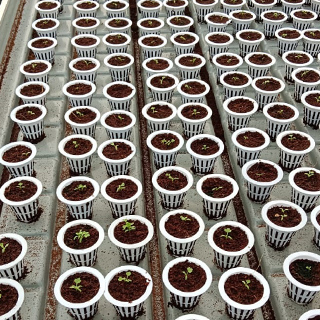
Maceta de red de plastico/Medios de cultivo Rockwool
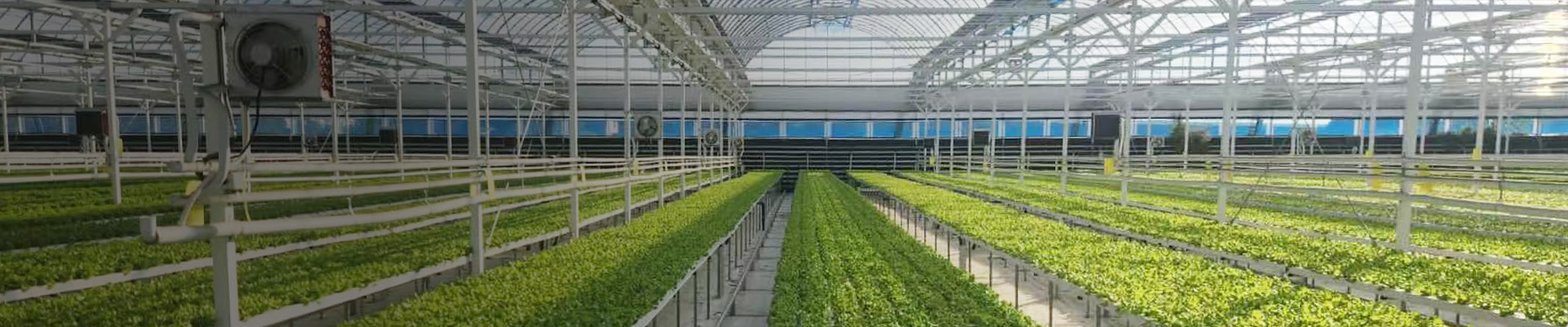
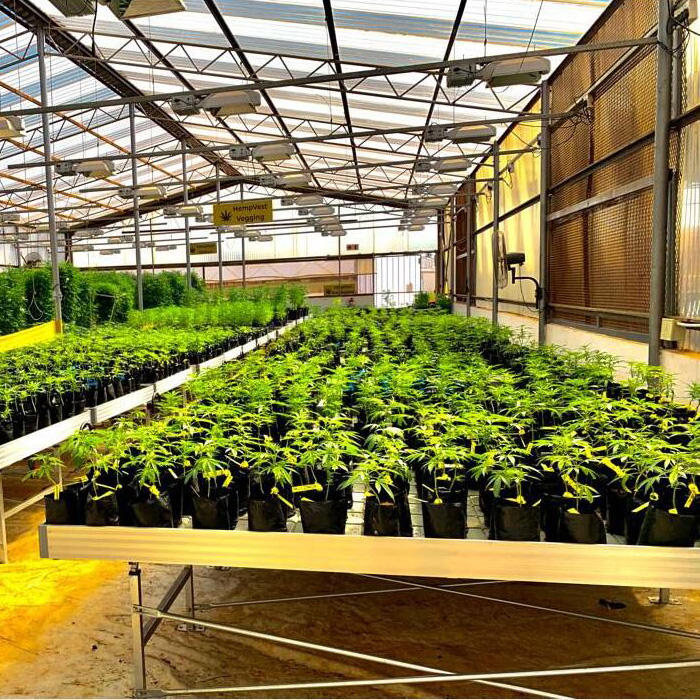


A Hydroponic Flood Tray is an essential component of an ebb and flow hydroponic system, providing a stable growing surface for plants, nursery pots, and growing containers. Designed for controlled irrigation in greenhouses, nurseries, and indoor growing facilities, a hydroponic flood tray allows nutrient solution to spread across the growing area before draining away after each irrigation cycle.
For commercial growers, choosing the right hydroponic growing tray can help simplify watering, improve growing space organization, and support more consistent plant management. Whether used for vegetable seedlings, herbs, flowers, or potted plants, a well-designed flood tray offers a practical solution for soilless cultivation.
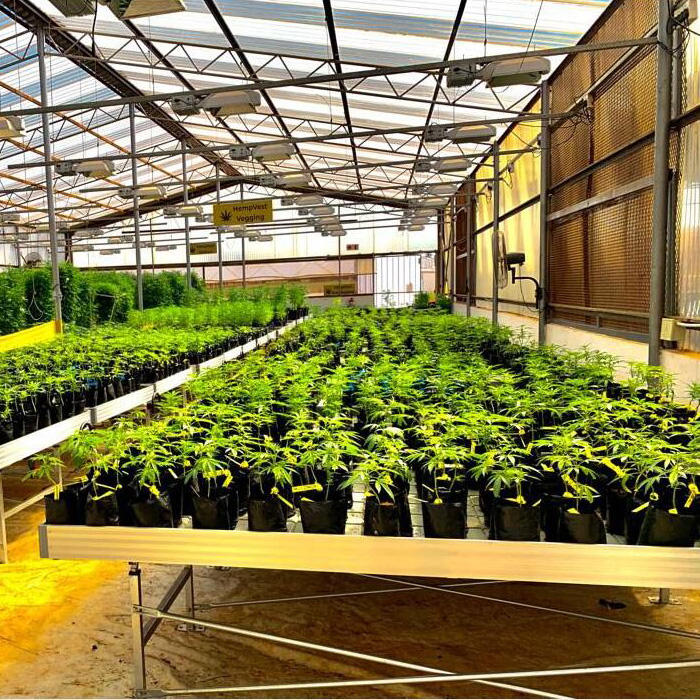
A hydroponic flood tray is a shallow tray used to temporarily hold and distribute nutrient solution around plant containers or growing media. It is commonly used in an ebb and flow hydroponic system, also known as a flood and drain system.
During irrigation, nutrient solution enters the tray and rises to a controlled level, allowing plant roots or growing media to absorb water and nutrients. The solution then drains back into a reservoir or collection system, depending on the installation.
Unlike NFT hydroponic channels, which deliver a shallow stream of nutrient solution through narrow growing channels, a hydroponic flood tray provides a broader growing surface. This makes it suitable for growers who need to manage multiple pots, seedling containers, or small plants within one irrigation area.
A hydroponic flood tray is designed to work with periodic flooding and drainage. When connected to a compatible irrigation system, it helps distribute nutrient solution across the tray and allows excess solution to drain after watering.
The effectiveness of irrigation depends on the tray design, drainage arrangement, growing container placement, and overall system configuration.
Hydroponic flood trays can be used with compatible nursery pots, net pots, seedling trays, and other plant containers. They are suitable for organizing multiple plants in one growing area without requiring a separate irrigation setup for every container.
Before purchasing, growers should check the tray dimensions, usable growing area, and compatibility with their existing containers.
A greenhouse flood tray provides a defined growing area for seedling propagation, flower production, herbs, and selected vegetable crops. It can help growers organize plants by crop type or growth stage and make routine irrigation easier to manage.
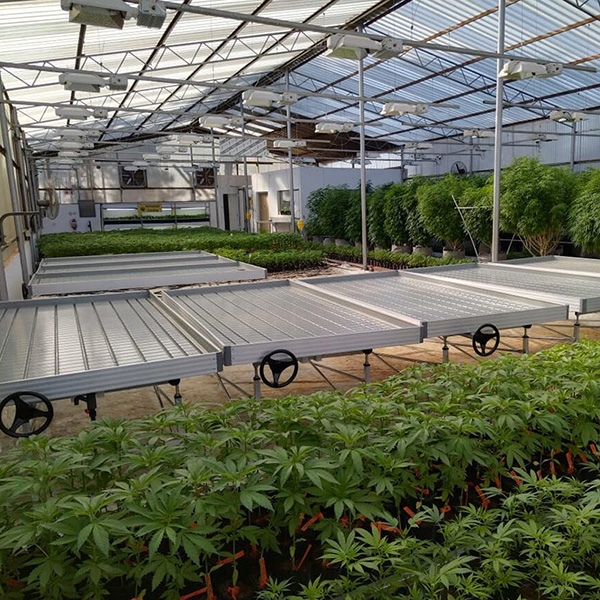
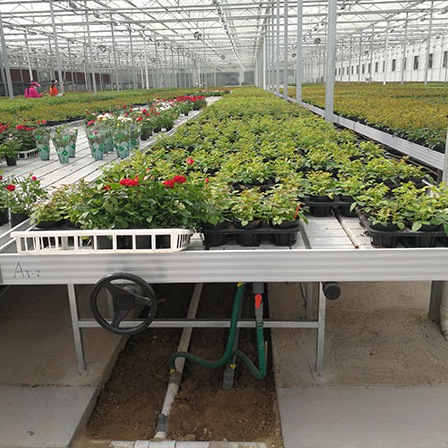
Depending on the installation, flood trays may be placed on fixed benches, rolling greenhouse benches, or other suitable support structures.
Hydroponic flood trays can be used with growing media such as coco coir, perlite, rockwool, and expanded clay when the selected containers and irrigation setup are compatible.
The appropriate growing medium depends on the crop, root development requirements, irrigation frequency, and drainage conditions. The tray itself serves as the irrigation and growing platform rather than replacing the growing medium or plant container.
A hydroponic flood tray can form part of a larger ebb and flow hydroponic system. A complete installation may include a water reservoir, pump, supply lines, drainage connections, and a timer or controller.
The tray may be sold separately or supplied as part of a complete system. Buyers should confirm which components are included before placing an order.
The following table outlines the main specifications buyers should review when selecting a hydroponic flood tray. Actual values depend on the product model and manufacturer.
| Specification | Details |
|---|---|
| Product Name | Hydroponic Flood Tray |
| Product Type | Hydroponic growing tray / flood and drain tray |
| Irrigation Method | Ebb and flow irrigation |
| Main Application | Hydroponics, greenhouse growing, nursery production |
| Suitable Plants | Seedlings, herbs, flowers, and compatible vegetables |
| Growing Containers | Compatible nursery pots, net pots, or seedling containers |
| Material | Confirm with the manufacturer |
| Tray Dimensions | Custom or model-specific; confirm before ordering |
| Drainage Design | Confirm the outlet position and drainage configuration |
| Installation | Suitable bench or support structure required |
| System Compatibility | Depends on tray dimensions, drainage, and irrigation setup |
| Accessories | Pump, reservoir, piping, and controls may be sold separately |
| Customization | Confirm available sizes and design options with the supplier |
Hydroponic flood trays provide an organized platform for raising seedlings before transplanting. When paired with compatible seedling containers and a suitable ebb and flow irrigation setup, they can help streamline watering across multiple plants.
Flower growers can use hydroponic flood tables and trays to manage potted plants in greenhouses and nurseries. The flat growing surface supports orderly placement and can simplify routine irrigation operations.
Flood trays can support the cultivation of herbs and selected vegetables when used with appropriate pots, growing media, and irrigation schedules. Crop suitability depends on root requirements, plant size, and the dimensions of the growing area.
In indoor farms and propagation rooms, hydroponic flood trays can be installed on suitable benches to create organized growing zones. Buyers should consider available floor space, tray depth, drainage access, and the weight of the tray when filled with water and loaded with plants.
Measure the available bench space and determine how many pots or seedling containers need to fit in each tray. The external dimensions alone may not indicate the usable growing area, so confirm the internal dimensions and tray depth when planning a commercial installation.
The tray material should suit the intended growing environment, cleaning routine, exposure to moisture, and expected service conditions. For commercial applications, ask the supplier about material composition, wall thickness, load capacity, and resistance to repeated use.
Do not compare products by material name alone; structural design and manufacturing quality also affect performance.
Reliable drainage is important for an ebb and flow hydroponic system. Check the location and size of the drain outlet, the connection method, and whether the tray can drain effectively when installed on the intended bench.
A suitable setup should avoid unintended water accumulation that could affect roots, growing media, or greenhouse operations.
Before ordering a hydroponic flood tray, confirm whether it is compatible with the existing pump, reservoir, supply lines, drainage pipes, and support bench. If you need a complete ebb and flow hydroponic system, verify whether these components are included or need to be purchased separately.
Commercial growing trays may require regular cleaning between crop cycles. A practical tray design should allow convenient access to the growing surface and drainage outlet. Ask the supplier about recommended cleaning methods and any material-specific restrictions.
The terms Hydroponic Flood Tray and Hydroponic Flood Table are closely related, but they do not always refer to the same product.
A hydroponic flood tray generally refers to the tray itself, which holds and distributes irrigation water. A hydroponic flood table may refer to the tray together with its supporting structure or to a larger growing bench designed for flood and drain irrigation.
For purchasing purposes, confirm whether the quoted product includes only the tray, a complete bench, or additional irrigation components. This distinction is particularly important when comparing wholesale prices from different suppliers.
Hydroponic flood trays help create a more organized irrigation and growing layout. By grouping plants within a defined area, growers can manage irrigation cycles and plant placement more systematically.
For greenhouse operators, nurseries, and commercial hydroponic farms, the main considerations are compatibility with the growing system, practical drainage, suitable dimensions, ease of maintenance, and dependable performance under the intended operating conditions.
The best tray is not necessarily the largest or least expensive option. It is the one that fits the growing layout, irrigation method, plant containers, and maintenance requirements of the operation.
A hydroponic flood tray is used to hold and distribute nutrient solution during flood and drain irrigation. It provides a growing platform for compatible plant pots, seedling containers, and growing media in greenhouses, nurseries, and indoor growing facilities.
The terms are often used interchangeably. Both generally describe a tray used in an ebb and flow or flood and drain irrigation system. However, product designs and included components can vary by supplier.
Yes. They can be used for suitable vegetable seedlings, herbs, and other crops when paired with compatible containers, growing media, and irrigation schedules. The best setup depends on the crop's root system and growing requirements.
Not necessarily. Some products are trays only, while complete ebb and flow hydroponic systems may include a pump, reservoir, piping, and control components. Always confirm the product scope before purchasing.
Consider the available bench space, number and dimensions of plant containers, tray depth, drainage position, and the amount of water held during irrigation. For commercial projects, request a dimension drawing and confirm the tray's load capacity with the supplier.
Looking for hydroponic flood trays for a greenhouse, nursery, or commercial growing project? Before requesting a quotation, prepare your required tray dimensions, material preferences, estimated order quantity, intended crops, and existing irrigation system details.
Providing this information helps the supplier recommend a suitable hydroponic flood tray configuration and clarify whether you need trays only, hydroponic flood tables, or a complete ebb and flow hydroponic system.

G and N is serving for more than 1,000 customers over 122 countries around the world, offering high-quality products and services to global customers.
Copyright © 2026 G AND N FORTUNE LIMITED All rights reserved.