

 English


News
Focus on G AND N FORTUNE LIMITED - Get to know the new information of the industry quickly!

2026-09-03 09:21:32
The ideal water level for NFT hydroponics is not a deep water level like in a DWC System. Instead, the Nutrient Film Technique (NFT) is designed to maintain a thin film of nutrient solution flowing continuously along the bottom of the hydroponic channel. For most NFT systems, the nutrient solution film is typically around 1–3 mm deep.
The goal is to provide plant roots with continuous access to water and nutrients while allowing the upper part of the root system to remain exposed to oxygen-rich air. Therefore, maintaining the correct NFT nutrient solution depth, flow rate, and channel slope is essential for healthy plant growth.
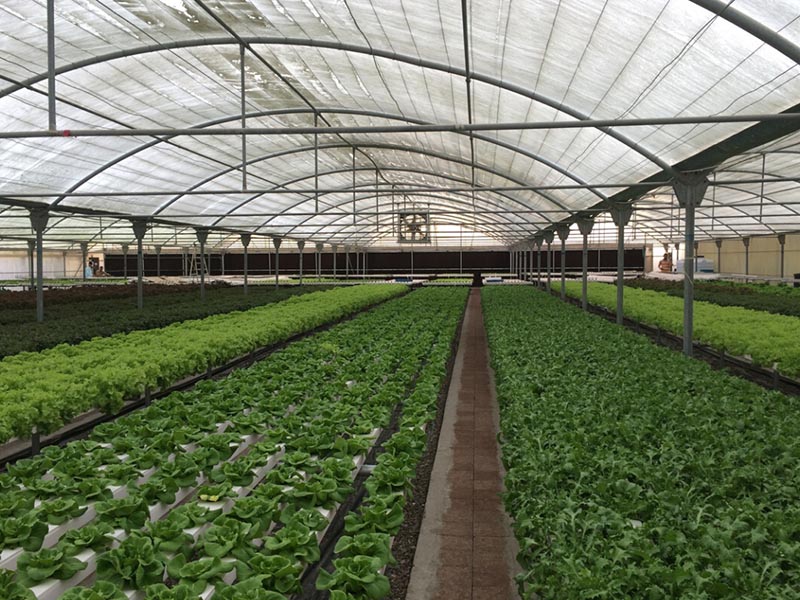
The Nutrient Film Technique, commonly called NFT hydroponics, is a soilless growing method in which a shallow stream of nutrient solution flows continuously through a growing channel.
Plants are placed into openings on the top of an NFT hydroponic channel, while their roots extend into the channel below. A pump delivers nutrient solution from a reservoir to the higher end of the channel. Gravity then allows the solution to flow along the channel and return to the reservoir.
The basic NFT hydroponic system works as follows:
Nutrient Reservoir → Water Pump → NFT Channel → Drainage → Reservoir
This continuous circulation provides the roots with water and dissolved nutrients while maintaining good oxygen availability.
For a typical NFT hydroponic system, the nutrient solution should form a shallow film approximately 1–3 mm deep along the bottom of the channel.
Rather than filling the NFT channel with water, the system should allow only a small amount of nutrient solution to flow across the channel floor.
A shallow nutrient film creates a balance between moisture and oxygen.
The roots that contact the nutrient solution can absorb:
Water
Nitrogen
Phosphorus
Potassium
Calcium
Magnesium
Other essential nutrients
At the same time, roots above the nutrient film remain exposed to air. This helps provide the oxygen required for root respiration.
If the water layer becomes too deep, more of the root system may remain submerged. This can reduce oxygen availability around the roots and increase the risk of root stress.
Not necessarily. The 1–3 mm range is a useful general guideline, but the actual nutrient film depth depends on the channel design, flow rate, slope, crop, root development, and system configuration.
In practice, growers should focus on achieving a thin, continuous, and even nutrient flow rather than trying to maintain a specific water depth at every point in the channel.
The NFT flow rate is just as important as nutrient solution depth.
A commonly used starting point for many NFT systems is approximately 1 liter per minute per channel, although the appropriate flow rate varies according to channel dimensions, crop type, channel length, slope, and pump capacity.
For example, young plants with small root systems may require less flow than mature plants with extensive roots.
The objective is to achieve enough flow to keep the roots supplied with water and nutrients without creating an excessively deep film.
If the flow rate is too low:
Some roots may dry out
Nutrient delivery can become inconsistent
Plants at the end of the channel may receive less water
Nutrient concentration and temperature may vary along the channel
If the flow rate is too high:
The nutrient film may become unnecessarily deep
Root oxygen availability may decrease
Water and energy consumption can increase
The system may become more difficult to balance
Therefore, growers should adjust the NFT hydroponic flow rate according to the actual growing conditions.
The slope of the NFT channel helps gravity move nutrient solution from the inlet toward the drainage end.
A commonly used NFT channel slope is around 1:30 to 1:40, although the appropriate slope depends on the channel design and flow characteristics.
For example, a 1:40 slope means the channel drops approximately 1 unit in height for every 40 units of horizontal length.
An appropriate slope helps maintain an even nutrient film throughout the channel.
If the slope is too shallow, nutrient solution may accumulate in some areas, resulting in poor drainage.
If the slope is too steep, the nutrient solution may flow too quickly and may not distribute as intended.
For commercial NFT hydroponic systems, the channel slope, channel length, inlet flow rate, and drainage design should therefore be considered together.
An NFT channel should not normally be filled with several centimeters of standing water.
The purpose of an NFT growing channel is to create a thin moving film rather than a deep reservoir.
A practical target is:
Nutrient film depth: approximately 1–3 mm
However, the actual depth can vary depending on:
NFT channel dimensions
Channel bottom design
Pump capacity
Flow rate
Channel slope
Number of plants
Root density
Crop type
Channel length
For this reason, visual inspection of the nutrient flow is often useful when setting up an NFT system.
If too much nutrient solution accumulates in the channel, the system may begin to behave more like a shallow-flow hydroponic system rather than a true NFT system.
When more roots remain submerged, the amount of air available around the root zone can decrease.
Poor oxygenation and excessive moisture can create unfavorable root-zone conditions and may increase the risk of root problems.
If the channel cannot drain the incoming solution efficiently, water may accumulate around the roots.
An excessive water level can also change the flow characteristics inside the channel, potentially affecting nutrient distribution.
The opposite problem can also occur.
If the nutrient flow is insufficient, some roots may not receive enough moisture or nutrients.
Potential symptoms include:
Wilting
Slow growth
Root drying
Nutrient deficiencies
Uneven plant development
The solution is not simply to increase the water depth. Instead, growers should check the NFT flow rate, pump capacity, channel slope, drainage, and root development.
Maintaining the correct nutrient film requires several components of the system to work together.
The pump should provide sufficient flow to distribute nutrient solution throughout the NFT channels.
The pump capacity should be selected according to the number and length of channels rather than simply choosing the largest available pump.
Flow should be strong enough to create a continuous film but not so strong that the channel becomes flooded.
A flow-control valve can help growers fine-tune nutrient delivery.
Make sure the NFT hydroponic channel is installed with a consistent slope toward the drainage outlet.
Blocked drainage can cause nutrient solution to accumulate in the channel and increase the effective water depth.
Regularly inspect end caps, drainage pipes, connectors, and other fittings.
As plants mature, their roots can become dense enough to interfere with nutrient solution flow.
Regular inspection helps identify blockages and maintain a stable nutrient film.
NFT is particularly suitable for crops with relatively small root systems and short growing cycles.
Common NFT crops include:
Lettuce is one of the most popular crops for NFT hydroponic systems because it has a relatively compact root system and grows well in a continuous nutrient flow.
Spinach can also be grown in NFT channels when temperature, nutrient concentration, and flow are properly controlled.
Pak choi and other Asian leafy vegetables are commonly grown in commercial NFT systems.
Kale can be cultivated in NFT channels, particularly when sufficient channel space is provided for mature plants.
Many herbs, including basil, mint, and cilantro, can be suitable for NFT hydroponics.
NFT and DWC require very different approaches to water depth.
| Feature | NFT Hydroponics | DWC Hydroponics |
|---|---|---|
| Water Structure | Thin flowing film | Deep nutrient solution |
| Typical Nutrient Depth | About 1–3 mm film | Roots are largely submerged |
| Root Oxygen | Air exposure + flowing solution | Usually requires aeration |
| Main Component | NFT channel | Reservoir/tank |
| Common Crops | Lettuce, herbs, leafy greens | Lettuce, leafy vegetables, herbs |
| Water Movement | Continuous flow | Static or circulating water |
The key difference is that NFT hydroponics does not depend on a deep water reservoir around the roots. Its main principle is continuous delivery of a thin nutrient film.
The design of the channel has a direct influence on nutrient flow and root development.
When selecting an NFT channel, consider the following factors:
The width and depth should provide enough space for the crop's root system while maintaining an appropriate nutrient flow.
Long channels require careful consideration of flow rate and nutrient distribution because plants at the end of the channel may experience different conditions from those near the inlet.
Food-grade PVC is commonly used for commercial hydroponic channels because it is durable, easy to clean, and suitable for agricultural applications when properly manufactured.
A well-designed drainage outlet helps prevent nutrient solution from accumulating in the channel.
A removable cover can make cleaning and maintenance easier while helping limit light exposure inside the channel.
To maintain stable NFT hydroponics water levels, growers should regularly monitor the complete system instead of focusing only on water depth.
Important parameters include:
Nutrient solution flow rate
pH
EC
Water temperature
Reservoir level
Channel slope
Drainage
Root condition
Pump performance
A stable nutrient solution supply is particularly important in NFT because the roots depend on continuous access to moisture. If the pump stops for an extended period, exposed roots can dry out much faster than roots in a deep-water system.
So, what is the ideal water level for NFT hydroponics? In most NFT systems, the goal is to maintain a thin nutrient solution film of approximately 1–3 mm, rather than a deep layer of standing water.
The exact nutrient film depth can vary according to the NFT channel design, crop, flow rate, slope, channel length, and root density. The most important objective is to maintain a continuous, shallow, and evenly distributed nutrient flow while keeping sufficient oxygen available to the roots.
With the right NFT channel, water pump, flow rate, drainage system, and nutrient management, NFT hydroponics can provide an efficient growing environment for lettuce, spinach, pak choi, herbs, and other leafy vegetables.

G and N is serving for more than 1,000 customers over 122 countries around the world, offering high-quality products and services to global customers.
Copyright © 2026 G AND N FORTUNE LIMITED All rights reserved.


