

 English

News
Focus on G AND N FORTUNE LIMITED - Get to know the new information of the industry quickly!

2026-08-27 10:27:42
Nutrient Film Technique (NFT) is a hydroponic growing method that continuously circulates a thin layer of nutrient solution through specially designed growing channels. Instead of growing plants in soil, an NFT hydroponic system delivers water and essential nutrients directly to plant roots while allowing part of the root system to remain exposed to oxygen.
In a typical NFT hydroponic system, a water pump moves nutrient solution from a reservoir to the upper end of an NFT hydroponic channel. The nutrient solution flows as a thin film along the bottom of the channel and then returns to the reservoir through the drainage system.
The basic circulation is:
Nutrient Reservoir → Water Pump → NFT Channel → Drainage → Nutrient Reservoir
This continuous circulation makes Nutrient Film Technique an efficient option for commercial hydroponic farming, greenhouse vegetable production, and indoor growing systems.
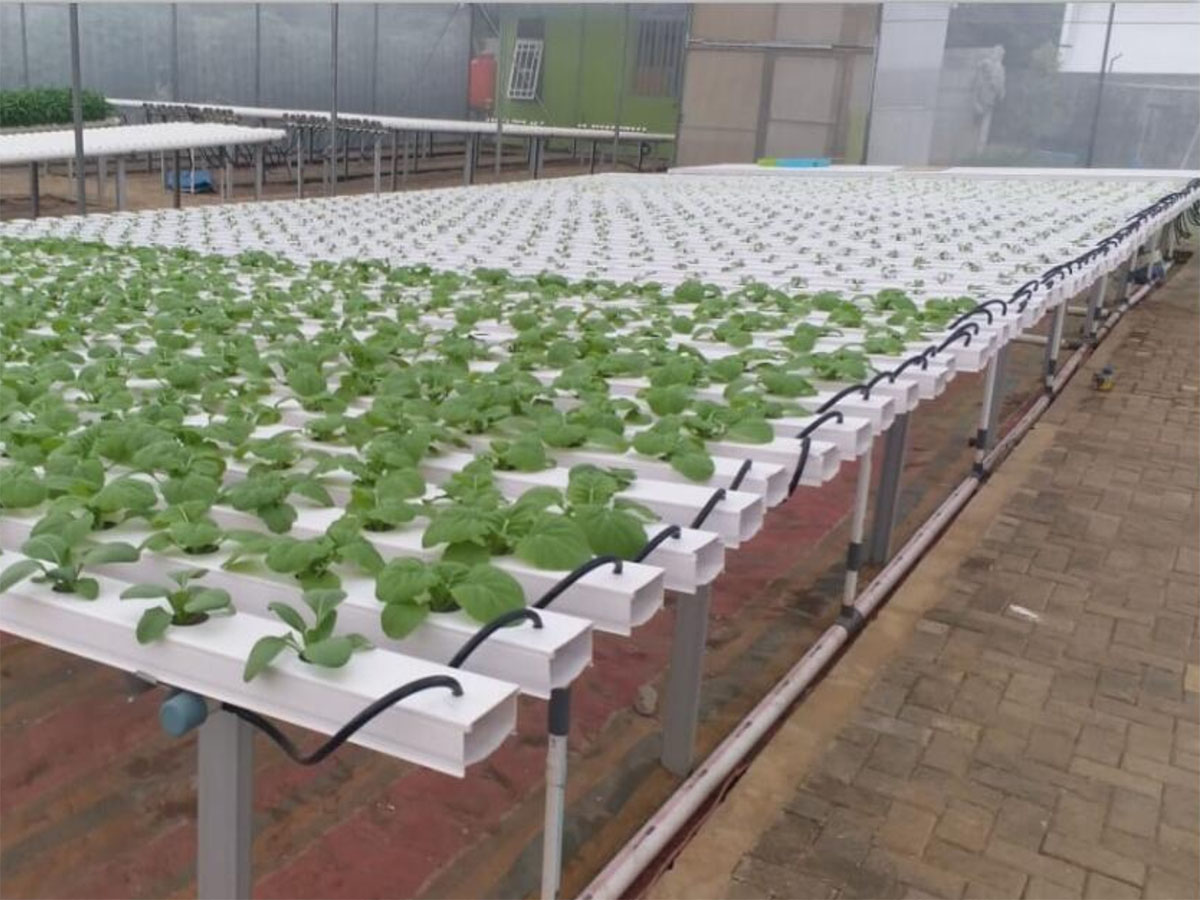
The working principle of Nutrient Film Technique hydroponics is based on maintaining a shallow, continuously flowing layer of nutrient solution around the plant roots.
The process starts with a reservoir containing water and hydroponic nutrients. A water pump transfers the solution through Irrigation Pipes to the upper end of the NFT growing channel.
The NFT channel is installed at a slight slope. Gravity allows the nutrient solution to flow from the inlet toward the drainage end.
Only a thin film of solution is needed rather than filling the entire channel.
Plants are positioned in planting holes using Net Pots or suitable growing media. Their roots extend into the channel and contact the flowing nutrient solution.
The roots can absorb essential nutrients such as:
Nitrogen
Phosphorus
Potassium
Calcium
Magnesium
Other micronutrients
Because the channel is not completely filled with water, part of the root system remains exposed to air.
This provides oxygen to the roots and supports healthy root development.
After flowing through the channel, the nutrient solution drains back into the reservoir and can be circulated again.
This creates a recirculating hydroponic system that efficiently uses water and nutrients.
A complete NFT growing system generally consists of several essential components.
The NFT hydroponic channel is the main plant-growing component. It provides a controlled pathway for nutrient solution to flow underneath the plants.
Common names include:
NFT Channel
NFT Growing Channel
Hydroponic NFT Channel
Hydroponic Gutter
NFT Hydroponic Gutter
Food-grade PVC channels are commonly used because they are lightweight, durable, easy to install, and suitable for commercial greenhouse applications.
The reservoir stores the water and nutrient solution used by the system.
It should be easy to access for:
Water replacement
Nutrient adjustment
pH and EC monitoring
System cleaning
The hydroponic water pump transports nutrient solution from the reservoir to the NFT channels.
Proper pump capacity is important to maintain stable nutrient solution circulation.
Irrigation pipes connect the pump to the NFT channels and distribute nutrient solution throughout the growing system.
The drainage system allows nutrient solution to flow from the NFT channels back to the reservoir.
A properly designed drainage system helps maintain continuous circulation.
Net pots hold the plants in the planting holes. The roots grow through the openings and reach the nutrient solution inside the channel.
NFT hydroponics is particularly suitable for crops with relatively small or shallow root systems.
Common NFT crops include:
Lettuce
Spinach
Kale
Pakchoi
Arugula
Other leafy greens
Lettuce is one of the most popular crops for commercial NFT hydroponic systems because of its short growing cycle and relatively compact root system.
NFT systems can also be used for many herbs, including:
Basil
Mint
Coriander
Parsley
Crop selection should consider root size, nutrient requirements, growing cycle, and the dimensions of the NFT channel.
One of the main benefits of Nutrient Film Technique is efficient water circulation.
Instead of watering an entire soil-growing area, the nutrient solution is delivered directly to the root zone and recirculated through the system.
This can help reduce water consumption when the system is properly designed and managed.
The continuous nutrient solution provides plants with regular access to water and essential nutrients.
This allows growers to manage the root-zone environment more precisely than traditional soil cultivation.
NFT hydroponics is a soilless growing method.
It eliminates the need for agricultural soil and can reduce problems associated with:
Soil-borne diseases
Soil compaction
Poor soil quality
Continuous cropping problems
NFT channels can be arranged in horizontal rows or incorporated into vertical structures.
This makes NFT growing systems suitable for:
Commercial greenhouses
Urban farms
Indoor farms
Small-scale growing projects
Plants grown in organized NFT channels are easier to inspect and harvest.
The system can also simplify:
Irrigation management
Root inspection
Channel cleaning
Crop harvesting
A greenhouse NFT system combines Nutrient Film Technique with a protected growing environment.
Greenhouses can help growers control:
Temperature
Humidity
Ventilation
Light
Pest exposure
An NFT system can also be combined with greenhouse equipment such as:
Greenhouse Insect Nets
Cooling systems
Ventilation systems
Greenhouse plastic film
LED grow lights
This makes NFT suitable for commercial leafy vegetable production.
A horizontal NFT growing system is one of the most common configurations.
The channels are installed in rows with a slight slope to allow nutrient solution to flow naturally.
Advantages include:
Easy installation
Convenient crop management
Good ventilation
Easy harvesting
It is especially suitable for large-scale greenhouse production.
NFT channels can also be incorporated into vertical structures.
A vertical NFT hydroponic system can make better use of limited floor space and increase the number of plants grown within a given area.
It is suitable for:
Urban farming
Indoor farming
Small greenhouses
Space-limited growing facilities
Both NFT and DWC are popular hydroponic growing methods, but their root environments are different.
| Feature | NFT Hydroponics | DWC Hydroponics |
|---|---|---|
| Full Name | Nutrient Film Technique | Deep Water Culture |
| Root Environment | Thin flowing nutrient film | Nutrient solution |
| Main Component | NFT Channel | Water Tank/Floating Raft |
| Nutrient Flow | Continuous | Roots remain in solution |
| Oxygen Supply | Air exposure + flowing solution | Usually air stones/aeration |
| Common Crops | Lettuce, leafy greens, herbs | Lettuce, leafy greens, herbs |
In simple terms:
NFT = a thin film of nutrient solution flows across the roots.
DWC = plant roots remain submerged in nutrient solution with supplemental oxygenation.
Regularly monitor:
pH
EC
Nutrient concentration
Water temperature
Maintaining appropriate nutrient conditions helps support consistent plant growth.
Clean NFT hydroponic channels regularly to remove:
Root debris
Algae
Sediment
Other blockages
A clean channel helps maintain smooth nutrient solution flow.
Inspect the pump, pipes, connectors, and drainage system regularly.
Uneven flow may be caused by:
Blocked irrigation pipes
Incorrect channel slope
Insufficient pump capacity
Blocked drainage outlets
Healthy roots need both nutrients and oxygen.
Regular root inspection can help growers identify potential problems before they affect the entire crop.
NFT depends on continuous nutrient solution circulation. If the pump stops, plants may quickly lose access to water and nutrients.
For commercial systems, regular pump maintenance and backup equipment can improve system reliability.
If some channels receive more nutrient solution than others, plants may develop unevenly.
Check:
Irrigation pipe connections
Channel slope
Pump flow rate
Drainage outlets
Algae can grow when light reaches nutrient solution.
Using suitable NFT channel covers and limiting unnecessary light exposure can help reduce algae growth.
Large or excessive root growth can interfere with nutrient solution flow.
Regular inspection and channel cleaning can help prevent blockages.
The quality of the NFT hydroponic channel directly affects the performance and maintenance of the entire system.
A high-quality channel should offer:
Durable construction
Smooth internal surface
Stable nutrient solution flow
Easy installation
Easy cleaning
Long service life
Suitable planting dimensions
Food-grade PVC NFT hydroponic channels are widely used in commercial greenhouse vegetable production because they provide a practical and durable growing solution.
Nutrient Film Technique, or NFT, is a hydroponic method where a thin layer of nutrient solution continuously flows through a growing channel and supplies plant roots with water and nutrients.
A water pump moves nutrient solution from a reservoir to the NFT channel. The solution flows along the channel, passes the plant roots, and then returns to the reservoir through the drainage system.
Lettuce and other leafy vegetables are among the most suitable crops for NFT hydroponics. Herbs such as basil, mint, coriander, and parsley can also be grown.
No. Nutrient Film Technique is a soilless cultivation method. Plants receive water and nutrients directly through the circulating nutrient solution.
Yes. A water pump is normally required to circulate nutrient solution from the reservoir to the NFT growing channels.
Yes. NFT channels are generally installed with a slight slope so the nutrient solution can flow smoothly from the inlet to the drainage end.
Yes. Greenhouse NFT hydroponic systems are widely used for commercial production of lettuce, leafy vegetables, and herbs.

G and N is serving for more than 1,000 customers over 122 countries around the world, offering high-quality products and services to global customers.
Copyright © 2026 G AND N FORTUNE LIMITED All rights reserved.


