

 English


News
Focus on G AND N FORTUNE LIMITED - Get to know the new information of the industry quickly!

2026-08-12 16:33:18
An automatic tray seeder machine is an agricultural machine designed to automate the process of sowing seeds into Seedling Trays or plug trays. It is widely used in commercial nurseries, greenhouse farming, vegetable production, horticulture, and modern agricultural operations.
Instead of manually placing seeds into each cell, an automatic Seedling Tray seeder uses mechanical, pneumatic, or vacuum systems to accurately distribute seeds into individual tray cells. Depending on the machine configuration, it can also integrate substrate filling, dibbling, sowing, covering, watering, and tray conveying functions.
For growers who need to produce large quantities of uniform seedlings, an automatic tray seeding machine can significantly reduce labor requirements while improving sowing efficiency and consistency.
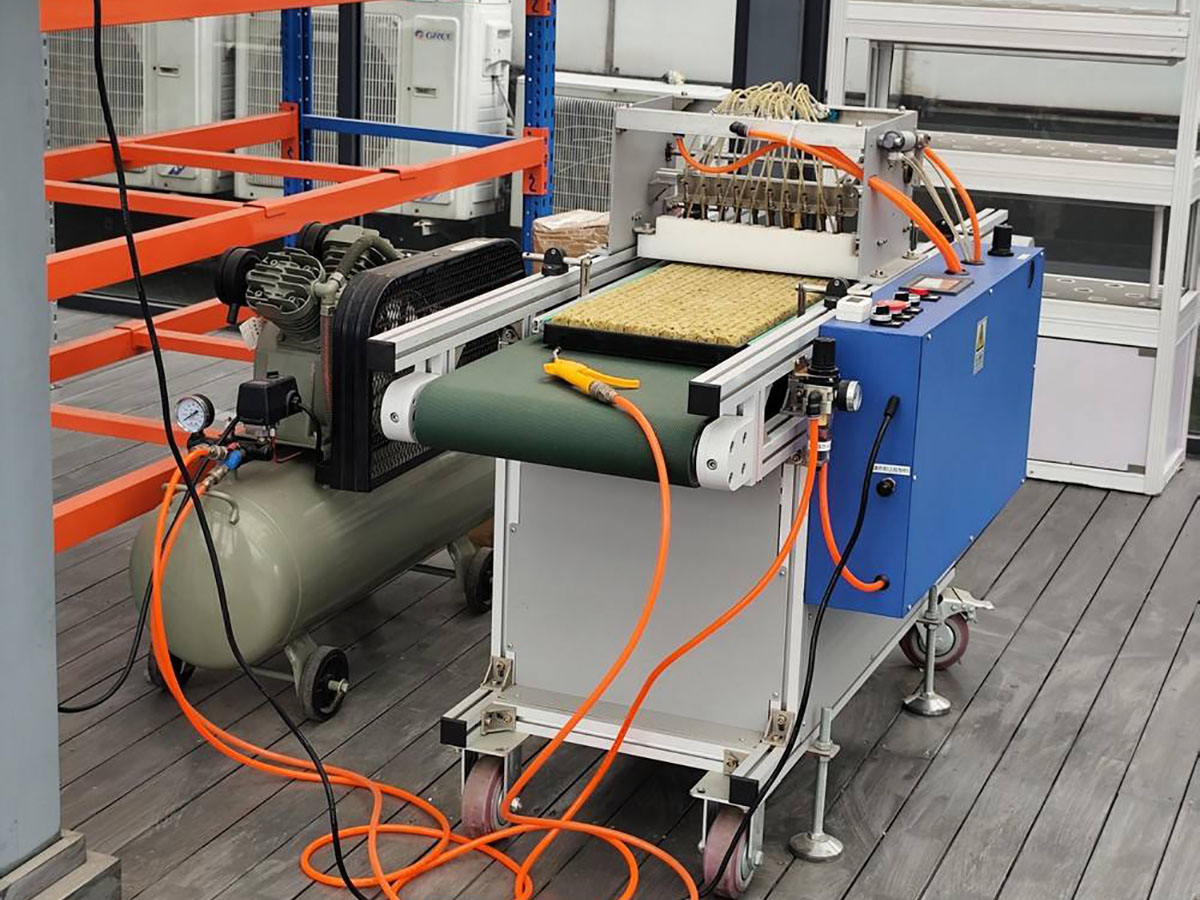
The process begins when empty Seedling Trays are placed into the feeding section. The automatic tray seeder machine transports each tray through the production line at a controlled speed.
For systems equipped with a substrate filling unit, the machine fills each tray cell with suitable growing media such as peat, coco coir, or other seedling substrates.
The substrate is distributed evenly to provide each cell with a suitable environment for seed germination and root development.
The core function of an automatic seedling tray seeder is accurately placing seeds into individual cells.
Different seeding technologies can be used depending on the seed type, including:
Vacuum seed suction
Pneumatic seed placement
Mechanical seed metering
The appropriate system helps improve seed placement accuracy and reduce seed waste.
After sowing, some automatic tray seeder machines can cover the seeds with a thin layer of growing media. Watering can also be integrated into the production line to provide initial moisture for germination.
The finished trays are automatically transported to the next stage, where they can be moved to a greenhouse, nursery, or germination area.
The tray feeding system automatically moves empty trays into the seeding line, reducing manual handling.
The substrate filling system distributes growing media evenly throughout the seedling tray.
A dibbling mechanism creates planting holes at predetermined positions before seeds are placed into the tray.
The seed sowing system accurately places seeds into the prepared holes. Vacuum and pneumatic systems are commonly used for precision seeding.
A covering unit can distribute a thin layer of growing media over the seeds after sowing.
An integrated watering system can provide moisture to newly seeded trays before they are transferred to the growing area.
An automatic tray seeder machine can process large numbers of seedling trays much faster than manual sowing. This makes it particularly suitable for commercial nurseries and large-scale greenhouse operations.
Manual tray seeding requires workers to repeatedly fill trays and place individual seeds. Automation reduces repetitive labor and allows workers to focus on other nursery operations.
The machine can control seed spacing and placement more consistently than manual sowing. Uniform seed placement helps produce more consistent seedlings.
Precision seed metering can help reduce misplaced or excess seeds, which is especially valuable when using expensive hybrid or specialty seeds.
An automatic plug tray seeder can be integrated into commercial seedling production lines, making it suitable for vegetable, flower, and horticultural nurseries.
The suitability of an automatic tray seeder machine depends on the machine's seed metering system and the size and shape of the seeds.
Common applications include:
Lettuce seeds
Tomato seeds
Pepper seeds
Cabbage seeds
Broccoli seeds
Cucumber seeds
Strawberry seeds
Flower seeds
Other vegetable and horticultural seeds
Very small, irregularly shaped, coated, or unusually lightweight seeds may require a specialized seeding system.
In commercial greenhouses, an automatic vegetable seeder can be used to produce large quantities of uniform vegetable seedlings.
It is suitable for crops such as lettuce, tomato, pepper, cabbage, and other vegetables.
Nurseries can use automatic seedling tray seeders to improve production capacity and reduce manual sowing work.
The machine can also be used for flower seedlings and other horticultural plants that are suitable for plug-tray cultivation.
An automatic tray seeding machine can be integrated with substrate filling machines, germination systems, greenhouse equipment, and transplanting machines to create a more automated seedling production process.
| Feature | Automatic Tray Seeder Machine | Manual Seeding |
|---|---|---|
| Seeding speed | High | Low |
| Seed placement | Consistent | Depends on operator |
| Labor requirement | Lower | Higher |
| Large-scale production | Suitable | Less efficient |
| Seed waste | Can be reduced | May be higher |
| Production consistency | High | Variable |
| Automation | High | Low |
For small-scale home gardening, manual sowing may be sufficient. For commercial nurseries and large greenhouse operations, an automatic tray seeder machine can provide significant efficiency advantages.
Make sure the machine is compatible with the tray dimensions and number of cells you use.
Different seeds require different seed metering technologies. Before purchasing an automatic tray seeder, check whether the machine can accurately handle your seed size and shape.
Choose the machine capacity according to your daily or hourly seedling production requirements.
Some machines perform only seeding, while complete systems can combine:
Tray feeding
Substrate filling
Dibbling
Seeding
Covering
Watering
Conveying
A higher level of automation can reduce manual labor and improve overall production efficiency.
An automatic tray seeder machine provides a practical solution for commercial seedling production by combining speed, precision, and automation.
For greenhouse growers and professional nurseries, it can help:
Increase seedling production capacity
Reduce manual labor
Improve seed placement consistency
Reduce seed waste
Standardize the sowing process
Support large-scale agricultural production
As greenhouse agriculture and automated nursery production continue to develop, automatic seedling tray seeders are becoming an important part of modern seedling production systems.
An automatic tray seeder machine is an agricultural machine that automatically sows seeds into individual cells of seedling trays or plug trays.
It is mainly used for commercial vegetable, flower, horticultural, and greenhouse seedling production.
Some models include an integrated substrate filling system, while others are designed only for seed sowing.
Depending on the seed metering system, it can sow vegetable, flower, and horticultural seeds of different sizes and shapes.
Yes. By automating tray feeding and seed placement, it can significantly reduce repetitive manual seeding work.
Yes. It is particularly suitable for commercial greenhouses, plant nurseries, and large-scale seedling production facilities.

G and N is serving for more than 1,000 customers over 122 countries around the world, offering high-quality products and services to global customers.
Copyright © 2026 G AND N FORTUNE LIMITED All rights reserved.


