
 English

News
Focus on G AND N FORTUNE LIMITED - Get to know the new information of the industry quickly!

2026-06-11 17:51:13
As urban land becomes more limited and agriculture moves toward more efficient production models, vertical growing systems have become one of the most important innovations in modern farming. By stacking crops upward instead of spreading them across large land areas, growers can significantly increase output per square meter while reducing water and nutrient waste.
Today, hydroponic vertical farming and indoor vertical farming systems are widely used in commercial agriculture, especially for leafy greens, herbs, and high-value crops. But how exactly does this system work, and what makes it so efficient?
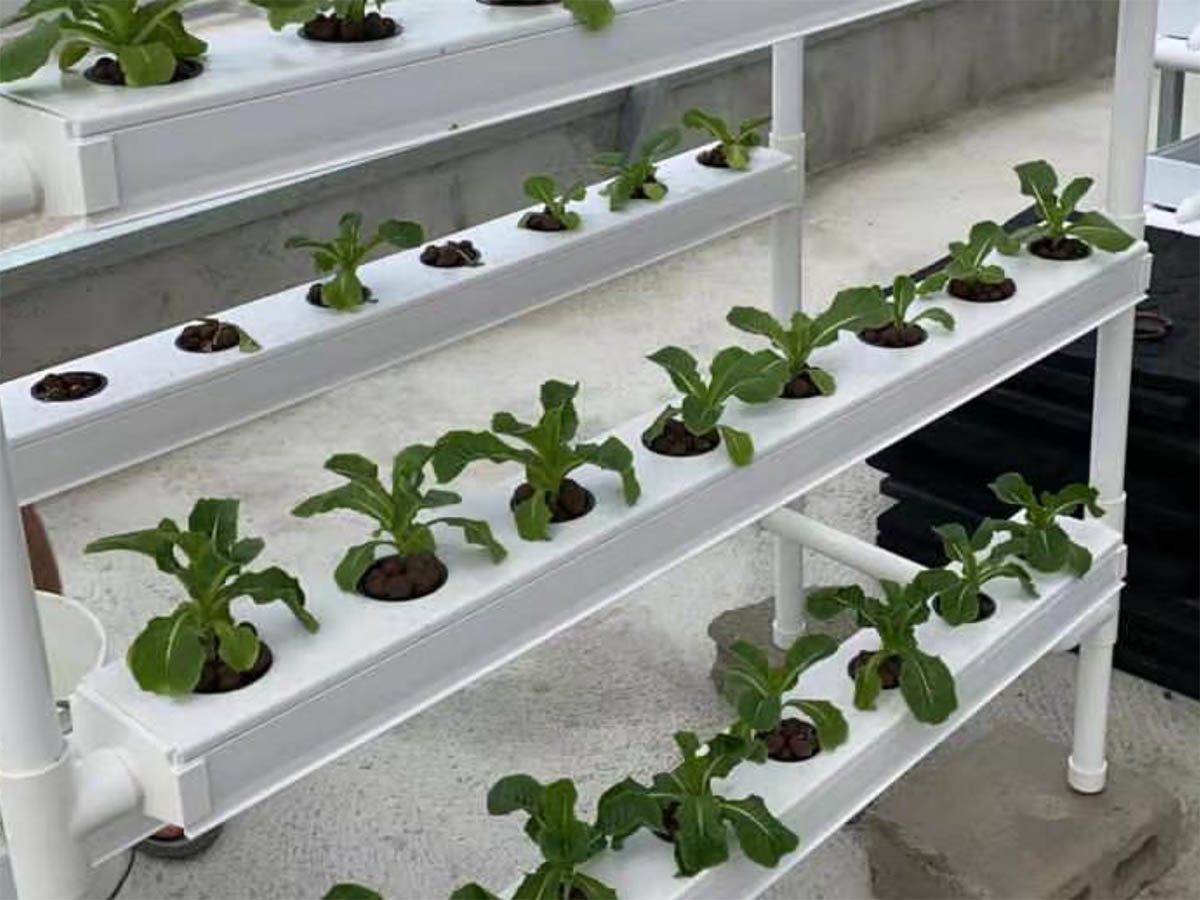
Vertical farming is a cultivation method where crops are grown in stacked layers, often in controlled environments such as greenhouses or fully indoor facilities.
Instead of traditional horizontal fields, vertical farming systems use:
Vertical racks or towers
LED lighting (in indoor setups)
Controlled irrigation systems
Hydroponic or aeroponic methods
This approach allows growers to maximize space efficiency and produce crops year-round.
Hydroponic vertical farming is a type of vertical farming that uses nutrient-rich water instead of soil.
In a vertical hydroponic system, plants receive:
Water mixed with nutrients
Oxygen at the root zone
Controlled light and temperature conditions
This eliminates soil dependency and improves growth consistency.
Common systems include:
NFT (Nutrient Film Technique) towers
Vertical grow towers
Rack-based hydroponic channels
Stackable planting modules
Understanding how does a vertical hydroponic system work helps explain why it is so efficient.
A typical setup includes:
Plants are placed in stacked layers using a vertical grow system or tower structure.
A pump circulates nutrient solution through the system, ensuring every plant receives equal feeding.
Excess water flows back into a reservoir, making the system highly water-efficient.
In indoor vertical farming, LED grow lights replace sunlight and provide optimal wavelengths for plant growth.
Temperature, humidity, and CO₂ levels are controlled to create ideal growing conditions.
This is the foundation of hydroponic vertical farming systems used in commercial agriculture.
There are several types of vertical growing systems, depending on crop type and facility design.
These are cylindrical systems where plants grow around a central water delivery column.
They are commonly used in:
Indoor farms
Restaurants
Urban agriculture projects
These systems use shelves or racks in vertical farming indoors environments.
They are widely used for:
Lettuce production
Herbs
Microgreens
A vertical greenhouse combines natural sunlight with hydroponic technology.
It reduces energy costs while maintaining high productivity.
Indoor vertical farming system refers to farming operations inside fully enclosed buildings.
This method is also known as:
Controlled Environment Agriculture (CEA)
Indoor farming
Vertical indoor farming
Year-round production
No climate dependency
Pest-free environment
Precise nutrient control
However, energy usage (especially lighting) is higher compared to greenhouse systems.
Many people ask about vertical farming and hydroponics and how they compare to soil-based agriculture.
| Factor | Traditional Farming | Vertical Hydroponics |
|---|---|---|
| Land Use | High | Very low |
| Water Usage | High | Up to 90% less |
| Growth Speed | Seasonal | Year-round |
| Pest Risk | High | Low |
| Yield per m² | Low | Very high |
This is why vertical farming hydroponics systems are becoming increasingly popular in urban agriculture.
A common question is the difference between vertical farming and hydroponics.
Hydroponics is a growing method (soil-free cultivation using water and nutrients)
Vertical farming is a structural system (stacking crops vertically)
When combined, they form hydroponic vertical farming systems, which maximize both space and resource efficiency.
A vertical hydroponic farm can produce significantly more crops per square meter than traditional farming.
Recirculating systems reduce water waste dramatically.
Indoor vertical farming systems can be built in cities, warehouses, or rooftops.
Controlled environments reduce the need for pesticides and herbicides.
From small vertical grow hydroponics kits to large industrial farms, systems can scale easily.
Despite advantages, vertical farming systems also face challenges:
Lighting, climate control, and infrastructure can be expensive.
Vertical farming hydroponics system operations require electricity, especially in indoor setups.
Operators need knowledge of nutrient balance, irrigation cycles, and environmental control.
Today, vertical hydroponic farming is used in many industries:
Commercial vegetable production
Urban farming projects
Research agriculture
Restaurant supply chains
Food security programs
Large-scale hydroponic vertical farms are now being built worldwide to address food demand in urban areas.
The future of vertical cultivation is closely linked with automation and smart agriculture.
Emerging trends include:
AI-controlled nutrient systems
Fully automated harvesting
Smart sensors for plant monitoring
Renewable energy-powered indoor farms
Integration with IoT farming platforms
As technology improves, hydroponics vertical farming will become more cost-efficient and widely adopted.
Vertical growing systems represent a major shift in how food is produced. By combining hydroponic vertical farming, controlled environments, and efficient space utilization, growers can achieve higher yields with fewer resources.
Whether in vertical farming indoors, greenhouse environments, or large-scale hydroponic vertical farms, this method offers a sustainable solution for modern agriculture challenges.
While there are still cost and energy considerations, the long-term potential of vertical hydroponics farming systems makes them a key part of the future of global food production.

G and N is serving for more than 1,000 customers over 122 countries around the world, offering high-quality products and services to global customers.
Copyright © 2026 G AND N FORTUNE LIMITED All rights reserved.


