
 English

Products
Productos principales:Canal hidroponico NFT/Cubo holandes hidroponico/Canalon de fresa/
Maceta de red de plastico/Medios de cultivo Rockwool
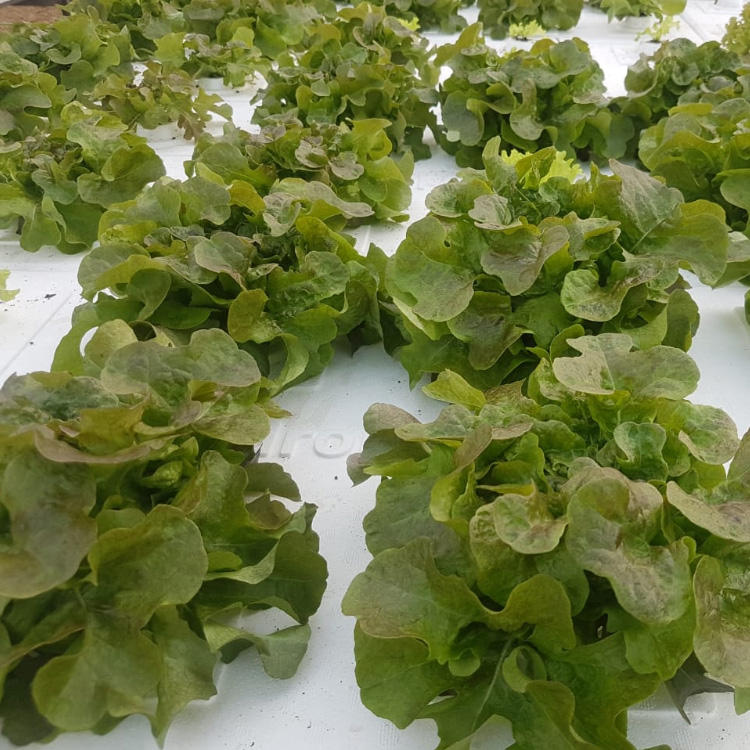


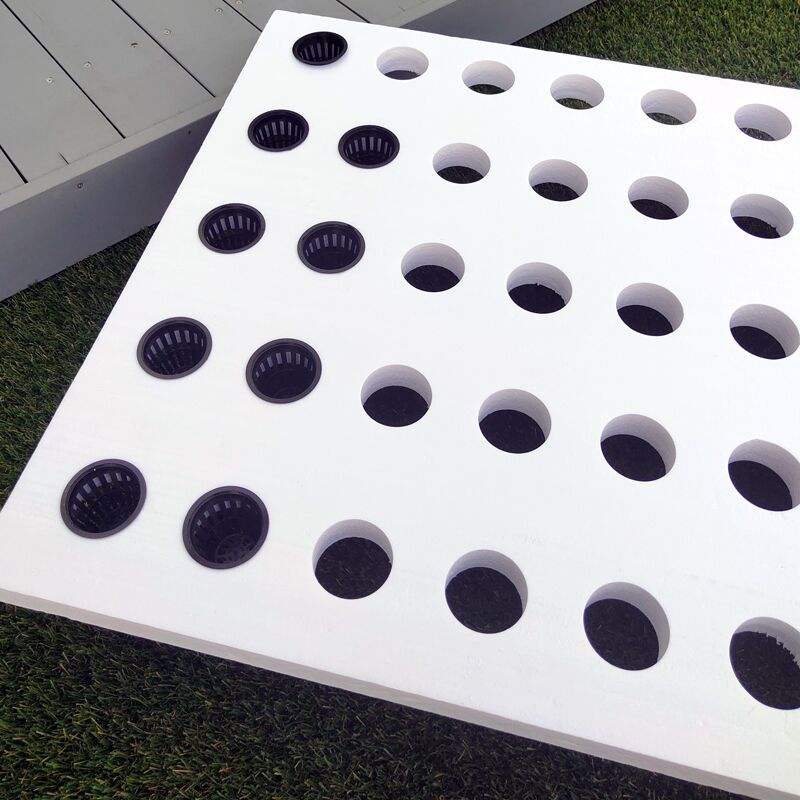
The DWC Hydroponic Floating Raft is a floating growing board designed for Deep Water Culture (DWC) hydroponic systems. It supports plants above a nutrient solution reservoir while allowing their roots to extend directly into the water for nutrient and water absorption.
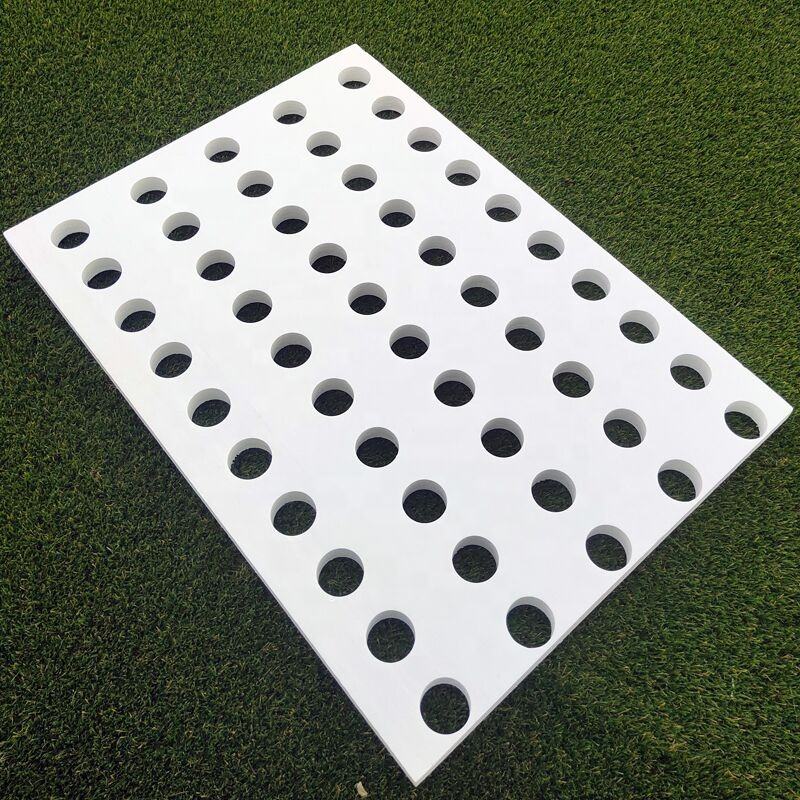
Designed for soilless vegetable cultivation, this Hydroponic Floating Raft uses a high-density XPS foam board structure that provides a stable platform for plants. Its single-layer floating design is suitable for commercial greenhouses, hydroponic farms, and other controlled growing environments.
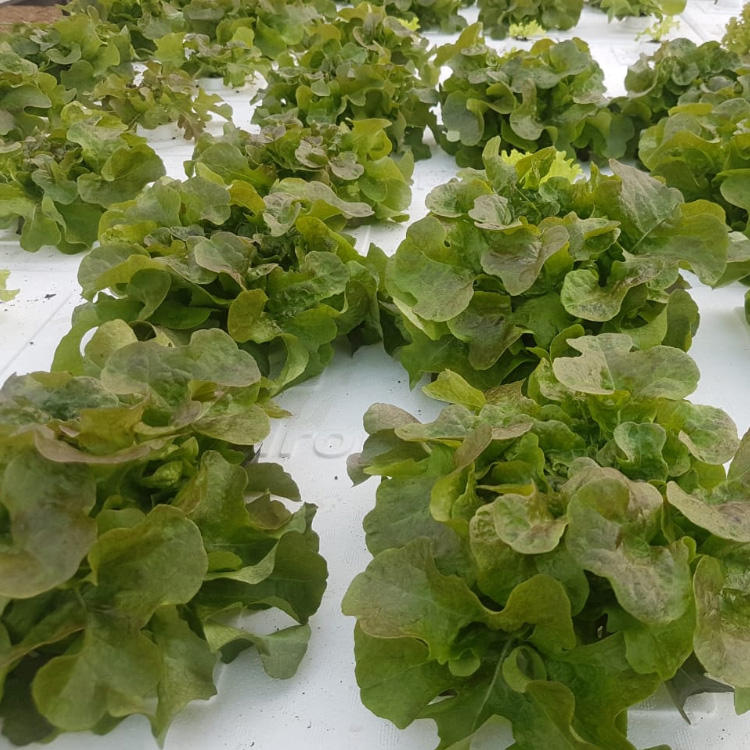
A DWC Hydroponic Floating Raft is a floating board used in a Deep Water Culture hydroponic system. Plants are placed in planting holes on the raft, while their roots extend below the board and remain in direct contact with the nutrient solution.
Unlike an NFT hydroponic system, which delivers a thin film of nutrient solution through a growing channel, DWC keeps the plant roots in a deeper nutrient solution.
The floating raft provides plant support while the nutrient solution supplies water and dissolved nutrients to the roots.
This Hydroponic Floating Raft is made with high-density XPS foam, providing a lightweight and stable structure for floating hydroponic applications.
The XPS Hydroponic Foam Board can be used as a growing platform in DWC systems and can be configured with planting holes according to the requirements of different crops and growing layouts.
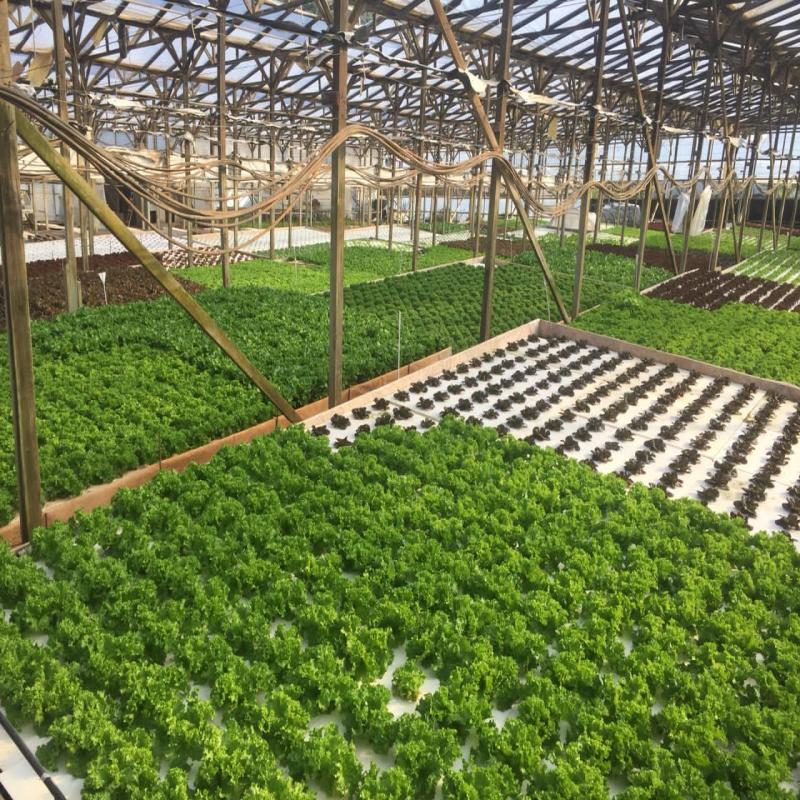
Its floating structure makes it suitable for large growing areas where multiple plants are cultivated on the same water surface.
The Single Layer DWC Hydroponic Floating Raft is designed for horizontal growing rather than multi-layer vertical cultivation.
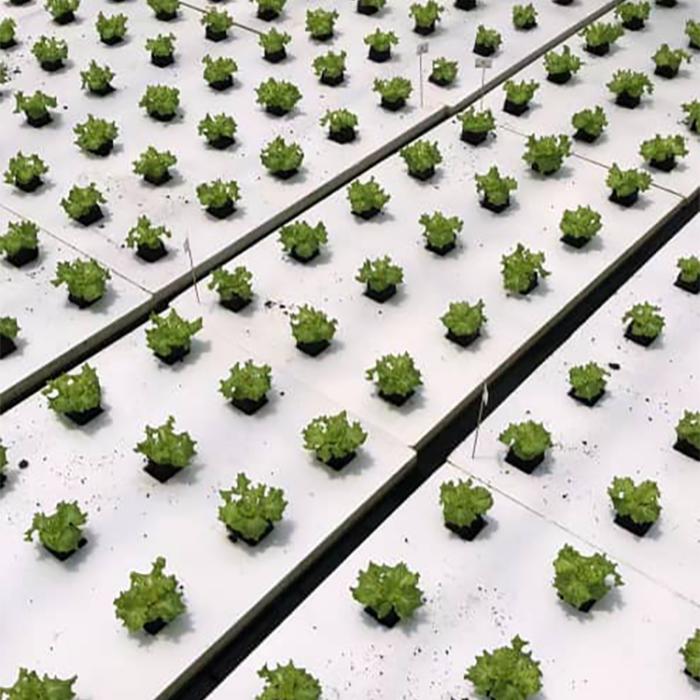
The raft floats directly on the nutrient solution, with plants distributed across the board according to the selected planting spacing.
This structure can be used for:
Commercial greenhouse vegetable growing
Large-scale leafy vegetable cultivation
Indoor hydroponic farming
Soilless agriculture
Commercial DWC hydroponic systems
Controlled-environment agriculture
For commercial projects, multiple floating boards can be arranged across a growing reservoir to create a larger cultivation area.
A typical DWC system works through a simple growing process.
Water and appropriate nutrients are added to the DWC growing reservoir.
Seedlings are positioned in the planting holes of the Hydroponic Raft Board, usually with suitable net pots or growing containers.
As plants develop, their roots extend below the floating board and directly into the nutrient solution.
The roots take up water and dissolved nutrients from the reservoir to support plant growth.
Because the roots remain in the nutrient solution, appropriate oxygenation, water quality, nutrient concentration, and water temperature are important for maintaining a suitable growing environment.
The DWC Hydroponic Floating Raft is particularly suitable for leafy vegetables with relatively compact root systems.
Common applications include:
Lettuce
Spinach
Pak choi
Kale
Water spinach
Other leafy greens
Crop suitability depends on the plant's root structure, growing cycle, planting density, and environmental conditions.
For commercial growers, the DWC Hydroponic Floating Raft can be integrated into a Commercial DWC Hydroponic System.
A typical commercial system may include:
Nutrient solution reservoir
DWC floating rafts
Planting holes
Net pots or growing containers
Water circulation equipment
Aeration equipment
Nutrient management equipment
The system layout can be planned according to greenhouse dimensions, crop type, planting density, and production requirements.
Different commercial growing projects may require different board dimensions and planting layouts. A Hydroponic Raft Board can therefore be customized according to the requirements of the growing system.
Possible customization options include:
The dimensions can be selected according to the size of the growing reservoir and available greenhouse space.
Hole diameter, quantity, and spacing can be designed according to the selected crops and planting density.
Different thickness requirements can be considered according to the required floating structure and application.
Customization allows the Floating Hydroponic Board to fit different DWC growing layouts instead of relying on a single standard configuration.
DWC and NFT are both soilless growing methods, but they use different structures and root environments.
| Feature | DWC Hydroponic Floating Raft | NFT Hydroponic Channel |
|---|---|---|
| Full name | Deep Water Culture | Nutrient Film Technique |
| Plant support | Floating raft | Growing channel |
| Root environment | Roots extend into nutrient solution | Roots contact a thin flowing nutrient film |
| Main product | Hydroponic Floating Raft | NFT Hydroponic Channel |
| Growing structure | Water reservoir + floating board | Sloped channel |
| Typical crops | Leafy vegetables | Leafy vegetables and herbs |
| Oxygen management | Important because roots remain in water | Roots have access to air around the nutrient film |
Therefore, a DWC Hydroponic Floating Raft is the appropriate growing structure when the project uses Deep Water Culture rather than NFT.
Plant roots remain directly in the nutrient solution, allowing them to access water and dissolved nutrients.
The floating board provides a stable platform for holding plants above the water surface.
A single large floating board can accommodate multiple planting positions, making it suitable for commercial growing areas.
DWC eliminates the need for traditional soil and allows growers to manage water and nutrients within a controlled system.
The DWC Hydroponic Floating Raft can be integrated into commercial greenhouse layouts for organized vegetable production.
The XPS Hydroponic Foam Board can be used in various DWC and soilless growing applications, including:
Commercial greenhouse hydroponics
Indoor hydroponic farms
Leafy vegetable production
DWC vegetable growing
Soilless agriculture
Commercial hydroponic systems
Aquaponics-related growing applications
The actual system configuration should be selected according to the crop, reservoir design, environmental conditions, and production requirements.
A DWC Hydroponic Floating Raft is a floating growing board used in Deep Water Culture systems. It supports plants above a nutrient solution while allowing their roots to extend directly into the water.
This type of raft can be made from high-density XPS foam, which provides a lightweight floating structure for hydroponic growing applications.
DWC floating systems are commonly used for leafy vegetables such as lettuce, spinach, pak choi, kale, and water spinach.
DWC keeps plant roots directly in a deeper nutrient solution, while NFT delivers a thin film of nutrient solution through a hydroponic channel.
Yes. Depending on the product design, dimensions, thickness, planting hole size, hole quantity, and spacing can be customized for different growing requirements.
Yes. A DWC Floating Raft can be integrated into commercial greenhouse hydroponic systems for large-scale vegetable cultivation.

G and N is serving for more than 1,000 customers over 122 countries around the world, offering high-quality products and services to global customers.
Copyright © 2026 G AND N FORTUNE LIMITED All rights reserved.